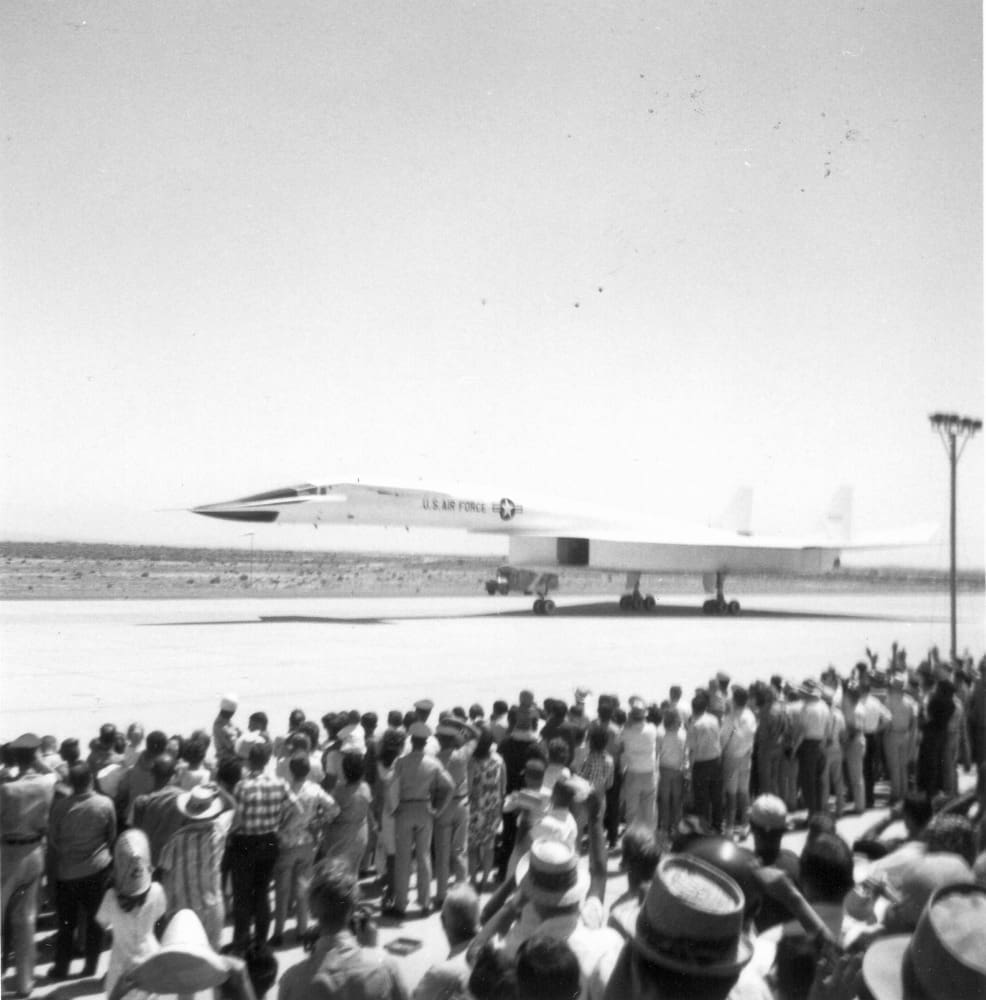
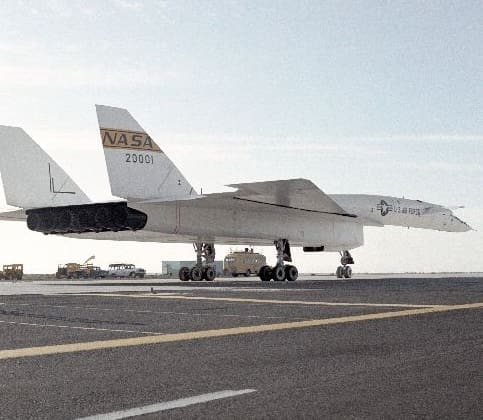
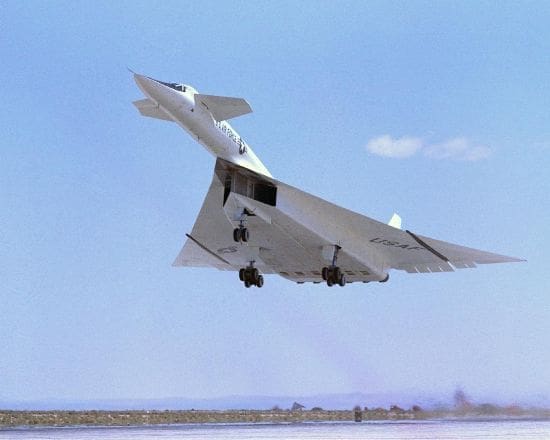
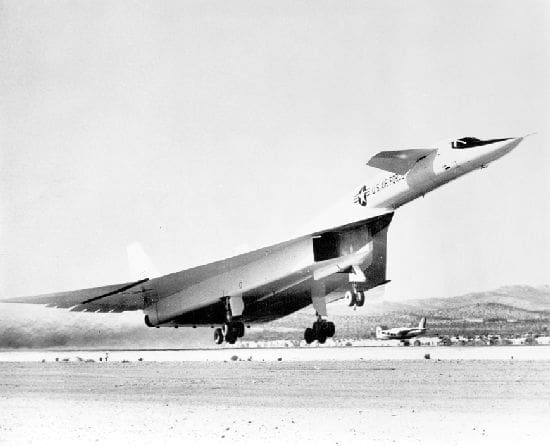
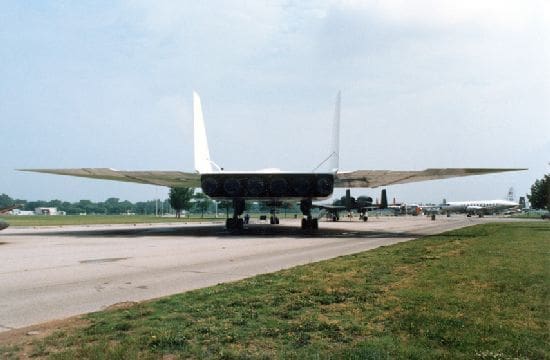
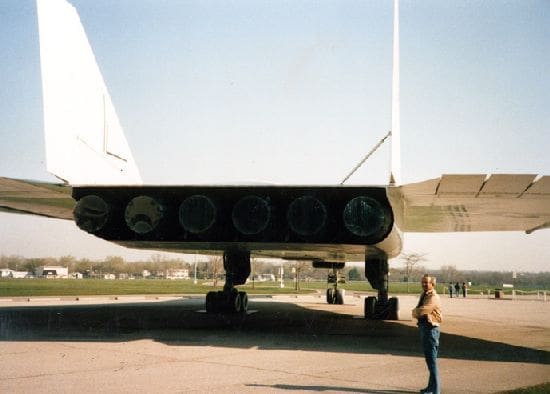
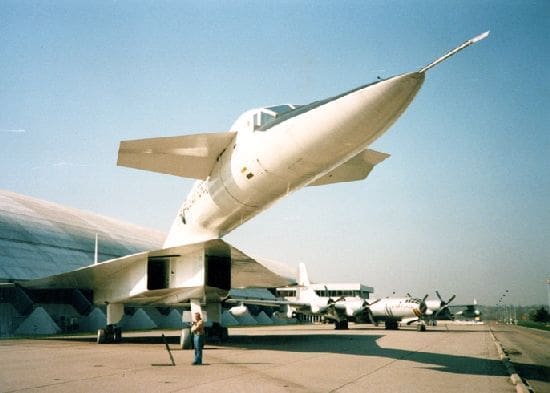
The North American XB-70 Valkyrie was designed as a Mach 3 strategic bomber intended to cruise above 70,000 feet and outrun the defenses of its era. The Air Force requirement called for an aircraft that could deliver nuclear weapons over intercontinental distances at sustained high speed. North American’s solution used a large delta wing, a canard foreplane, twin vertical tails, and six engines mounted side-by-side beneath the fuselage. Folding wingtips and a compression-lift concept were meant to improve efficiency and control at Mach 3.
Only two prototypes were completed. The first XB-70A (62-0001) flew on 21 September 1964 from Palmdale, California. The second (62-0207) flew in July 1965. By the time flight testing began, the operational bomber program had already been canceled. Advances in surface-to-air missiles and the growing role of intercontinental ballistic missiles made the original high-altitude penetration concept less practical. The two aircraft continued instead as research vehicles, gathering data on sustained high-speed flight, materials, and propulsion systems.
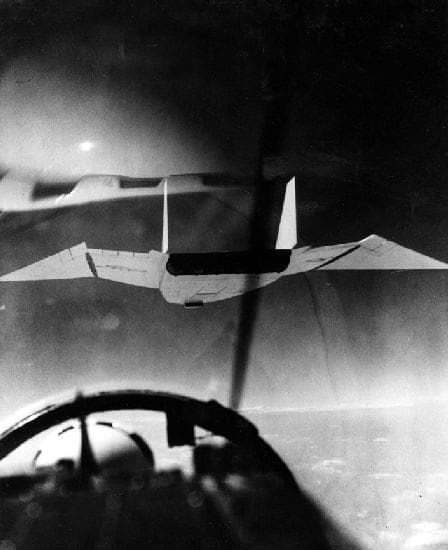
On 8 June 1966 the second aircraft was lost in a mid-air collision during a formation photo flight. An F-104 struck the Valkyrie’s wing and entered its wake; both the F-104 pilot and the XB-70 co-pilot were killed. The surviving aircraft completed its research program and made its final flight to the National Museum of the United States Air Force on 4 February 1969, where it remains on display.
The XB-70 proved that a large aircraft could sustain speeds near Mach 3 using specialized materials and aerodynamic features. It never entered production as a bomber, and its original mission was overtaken by changes in strategic weapons and defenses.
Specifications (XB-70A; figures from published technical references and museum data)















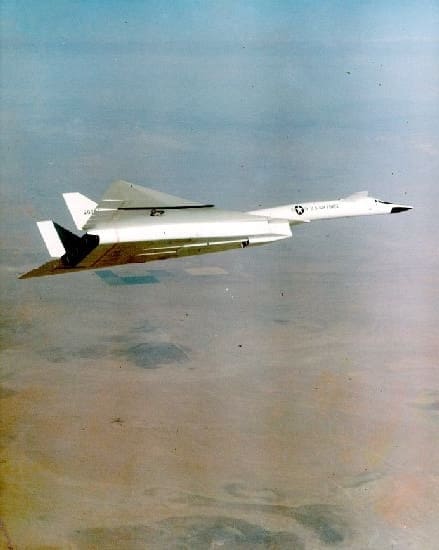


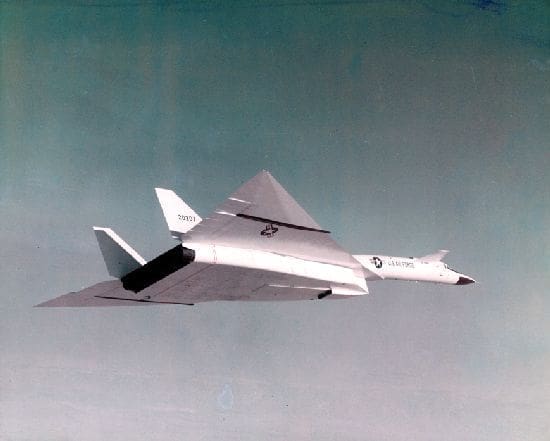


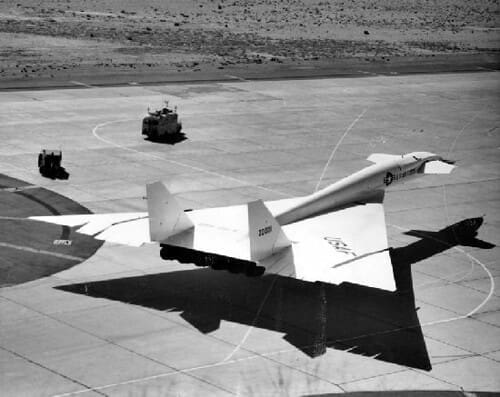


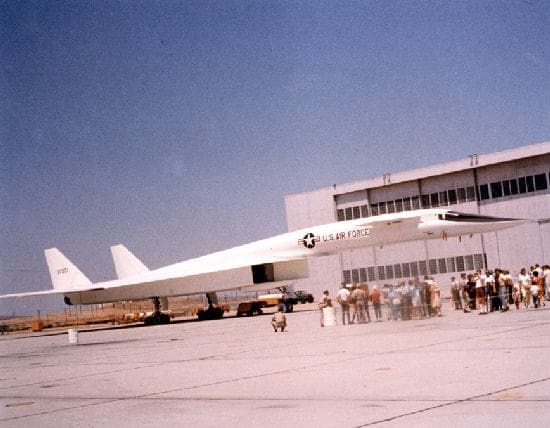


- Role: Experimental high-speed strategic bomber prototype
- Manufacturer: North American Aviation
- Powerplant: Six General Electric YJ93-GE-3 afterburning turbojets, approximately 28,000–28,800 lbf (125–128 kN) thrust each with afterburner
- Length: Approximately 185–189 ft (56.4–57.6 m); some references list 185 ft 0 in or 185 ft 10 in without pitot boom
- Wingspan: 105 ft (32.0 m) with tips level; reduced when tips folded
- Height: 30 ft 9 in (9.37 m)
- Wing area: Approximately 6,297 sq ft (585 m²)
- Empty weight: Approximately 210,000–253,600 lb (depending on source and configuration)
- Maximum takeoff weight: Approximately 534,700–542,000 lb (242,500–246,000 kg)
- Maximum speed: Mach 3.1 design (approximately 2,056 mph / 3,310 km/h) at altitude; highest demonstrated approximately Mach 3.08
- Cruise speed: Mach 3.0 design (approximately 2,000 mph)
- Service ceiling: 77,350 ft (23,600 m) design
- Range: Approximately 4,288 miles (6,900 km) on a combat mission
- Crew: Two (pilot and co-pilot)
- First flight: 21 September 1964
- Number built: 2 (third unfinished)
- Status: One aircraft preserved at the National Museum of the United States Air Force