The General Dynamics F-111 was the first production aircraft with variable-sweep wings. It began as a single design meant to serve both the U.S. Air Force and the U.S. Navy under the Tactical Fighter Experimental (TFX) program. The Air Force wanted a long-range, low-level strike aircraft that could penetrate at high speed in all weather. The Navy wanted a fleet-defense interceptor. The two requirements proved difficult to reconcile in one airframe.


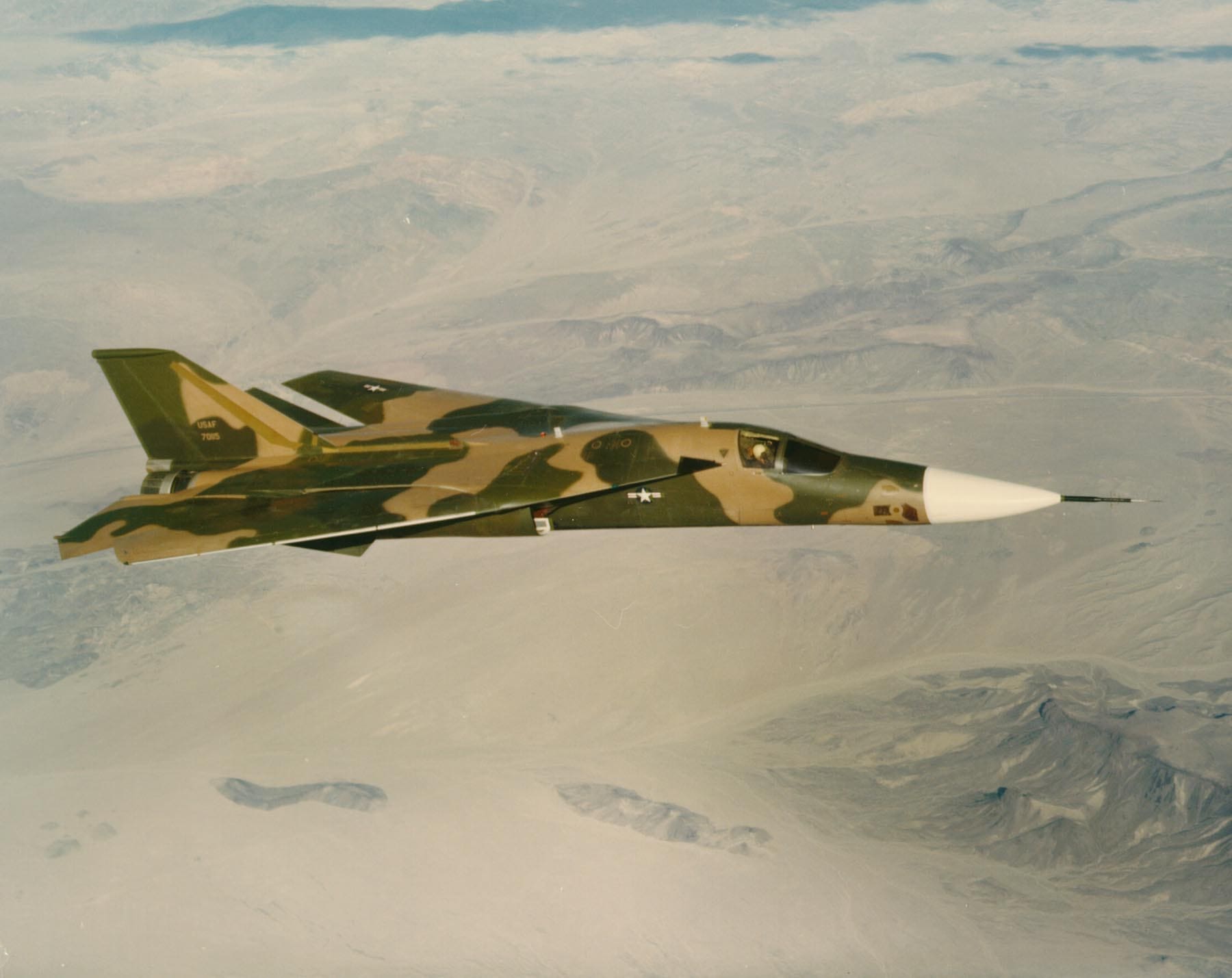
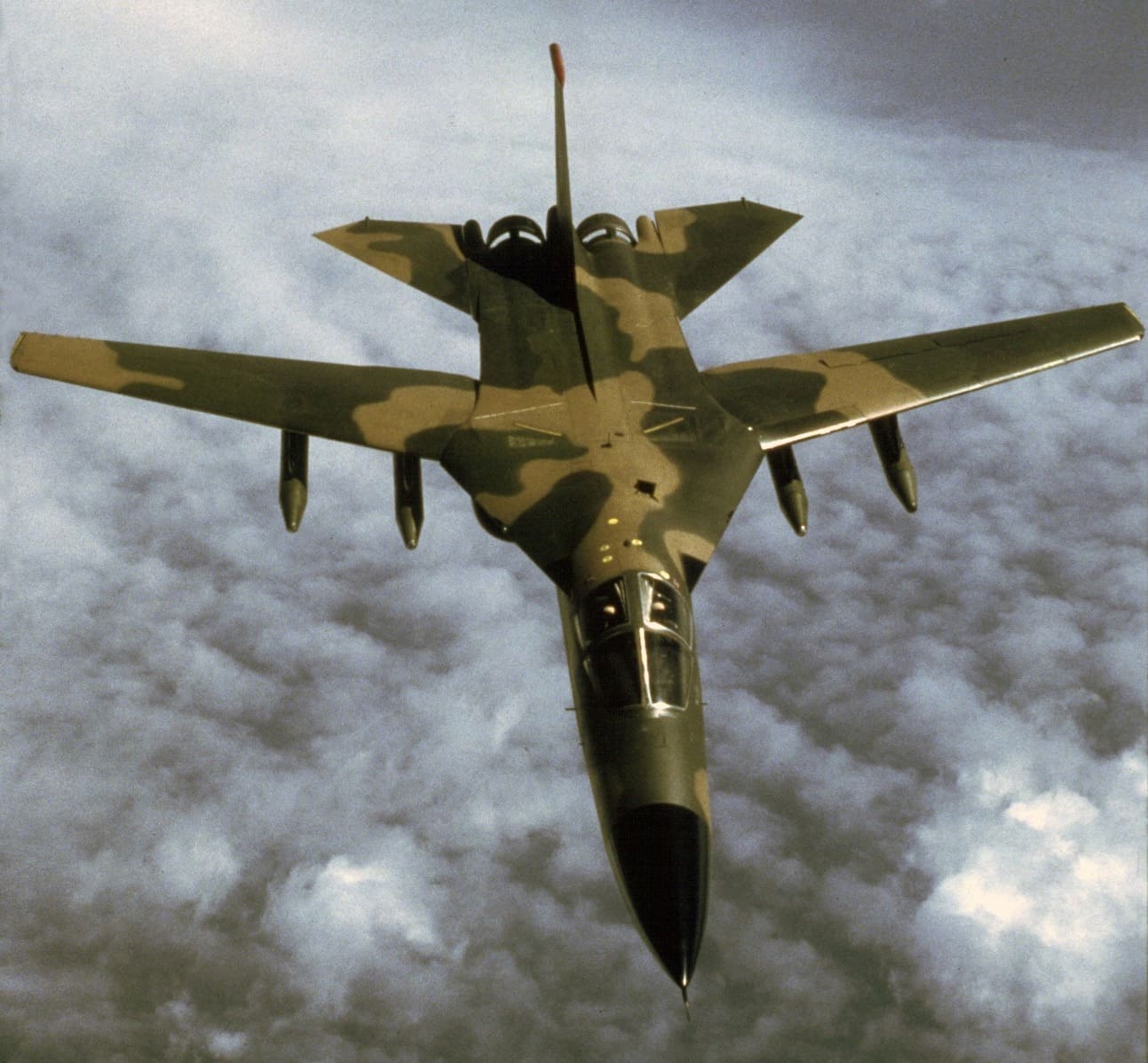
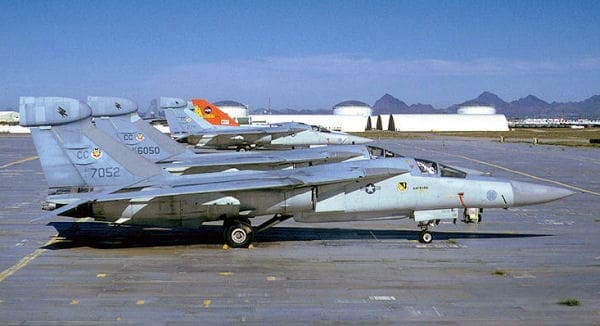


The prototype first flew on 21 December 1964. The Navy version, the F-111B, was canceled after limited testing because it was too heavy for carrier operations. The Air Force continued with the F-111A, which entered service in 1967. Early operational use in Southeast Asia exposed engine and inlet problems, and the type was temporarily withdrawn. Subsequent improvements in engines, intakes, and systems produced more reliable variants. The aircraft’s terrain-following radar allowed automatic low-level flight at night or in weather, a capability that later defined its combat role.
Later models, particularly the F-111F, received more powerful engines and improved avionics. These aircraft conducted long-range strike missions, including the 1986 raid on Libya and extensive operations during the 1991 Gulf War. The Royal Australian Air Force operated its own F-111C fleet until 2010. Electronic warfare conversions (EF-111A Raven) remained in U.S. service until 1998. Total production reached approximately 563 aircraft of all variants.
The F-111 demonstrated that variable-geometry wings could combine high-speed dash with efficient cruise and low-level handling. Once its early technical issues were resolved, it became a capable all-weather interdiction platform with long range on internal fuel.
Specifications (F-111F, representative late production model; figures from published technical references)
- Role: All-weather tactical strike / interdiction
- Manufacturer: General Dynamics
- Powerplant: Two Pratt & Whitney TF30-P-100 afterburning turbofans, approximately 25,100 lbf (112 kN) thrust each with afterburner
- Length: 73 ft 6 in (22.4 m)
- Wingspan: 63 ft (19.2 m) fully forward; approximately 32 ft (9.7 m) fully swept
- Height: 17 ft 1 in (5.22 m)
- Empty weight: Approximately 47,200–47,500 lb (21,400–21,540 kg)
- Maximum takeoff weight: 100,000 lb (45,360 kg)
- Maximum speed: Mach 2.5 (approximately 1,650 mph / 2,655 km/h) at altitude; Mach 1.2 at sea level
- Service ceiling: Approximately 60,000+ ft (18,300 m)
- Ferry range: Approximately 3,600–3,700 miles (5,800–5,950 km) with external tanks
- Combat radius: Roughly 1,300 miles class (mission dependent)
- Rate of climb: On the order of 25,000+ ft/min (clean)
- Crew: Two (pilot and weapons systems officer) in a side-by-side cockpit with an escape capsule
- Armament: Internal weapons bay plus pivoting wing pylons; typical external load up to approximately 25,000–31,500 lb; optional 20 mm M61 cannon
- First flight: 21 December 1964
- Introduction: 1967
- Number built: Approximately 563 (all variants)
- Retirement: USAF F-111F 1996; EF-111A 1998; RAAF F-111C 2010