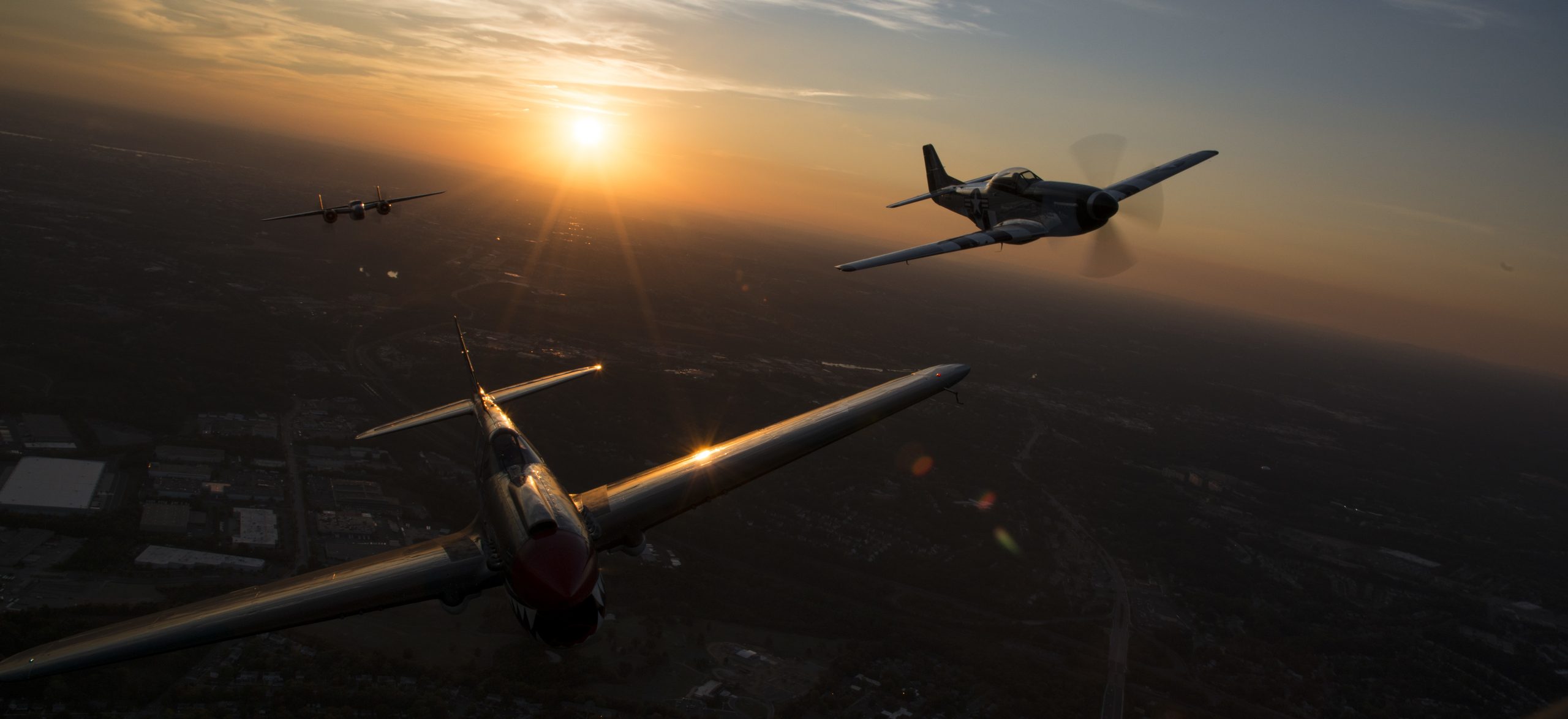
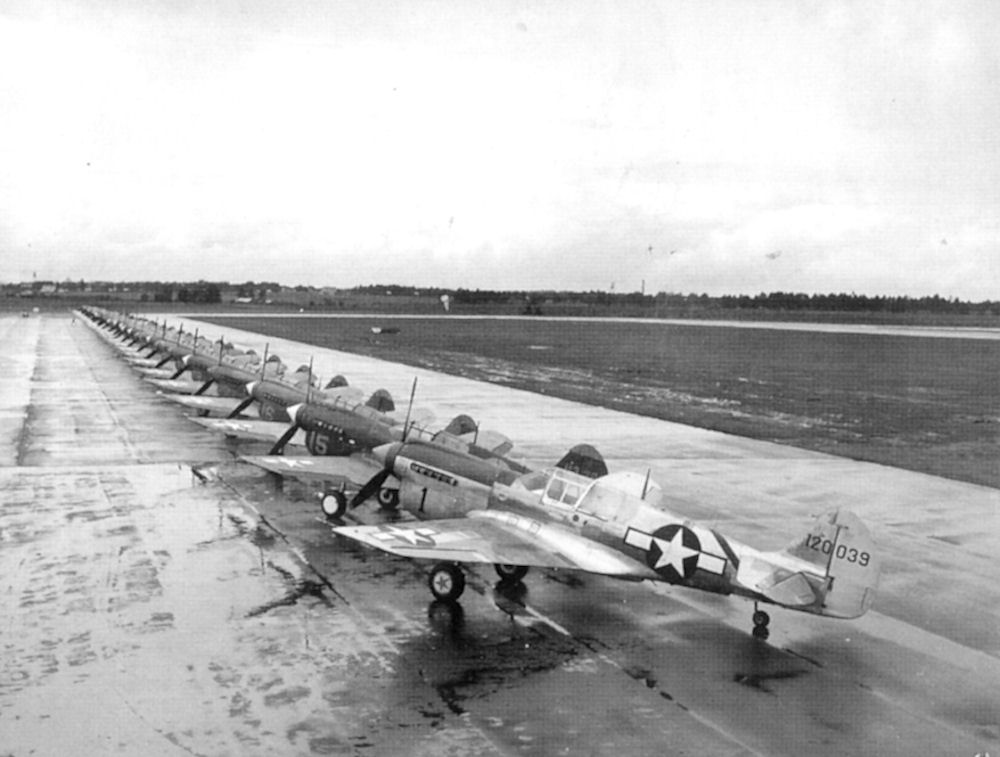

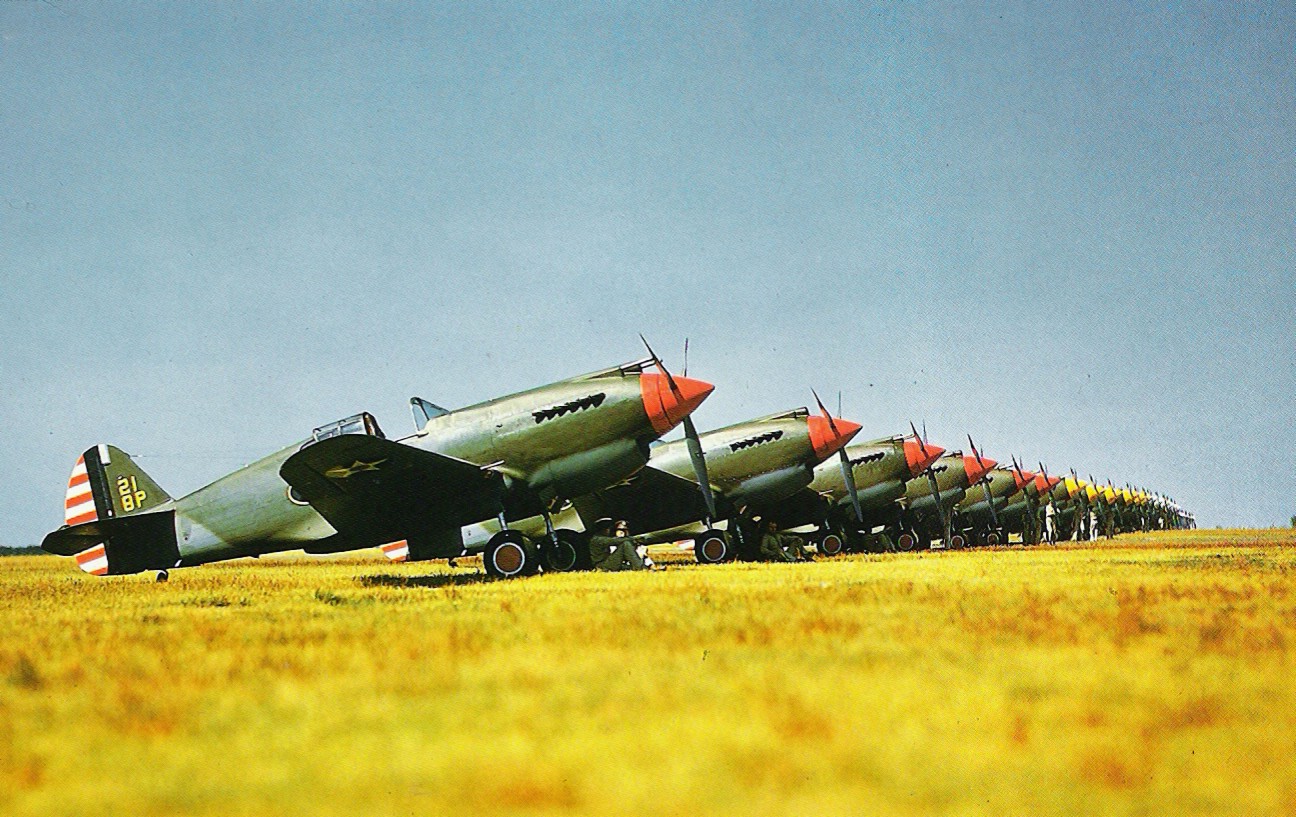
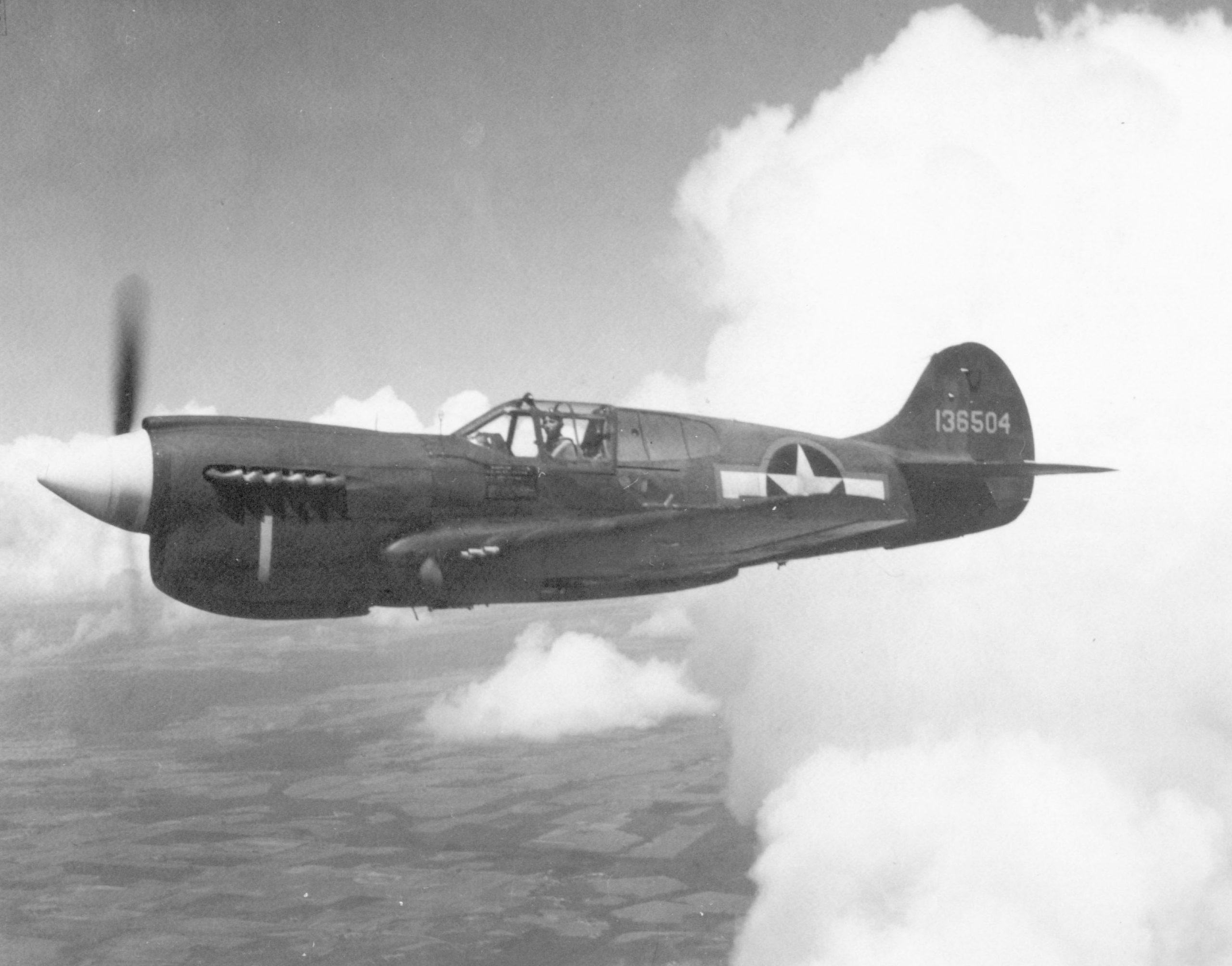

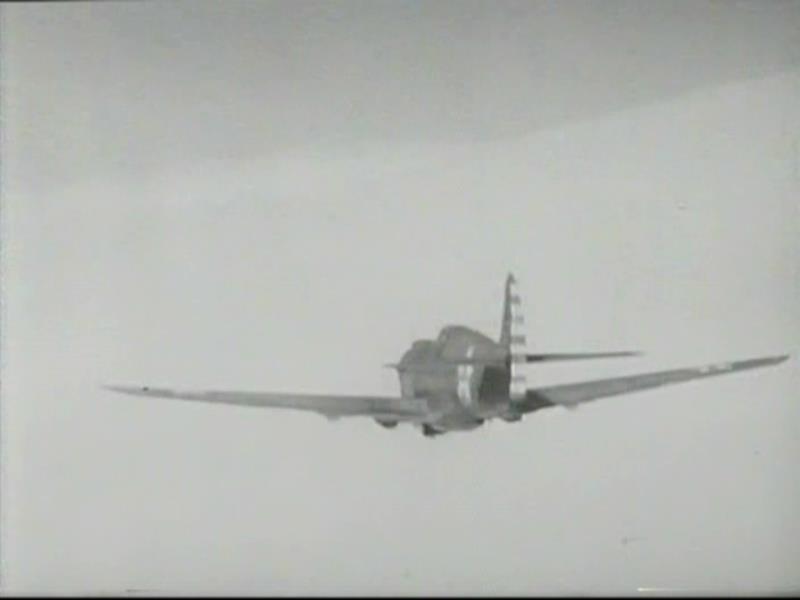
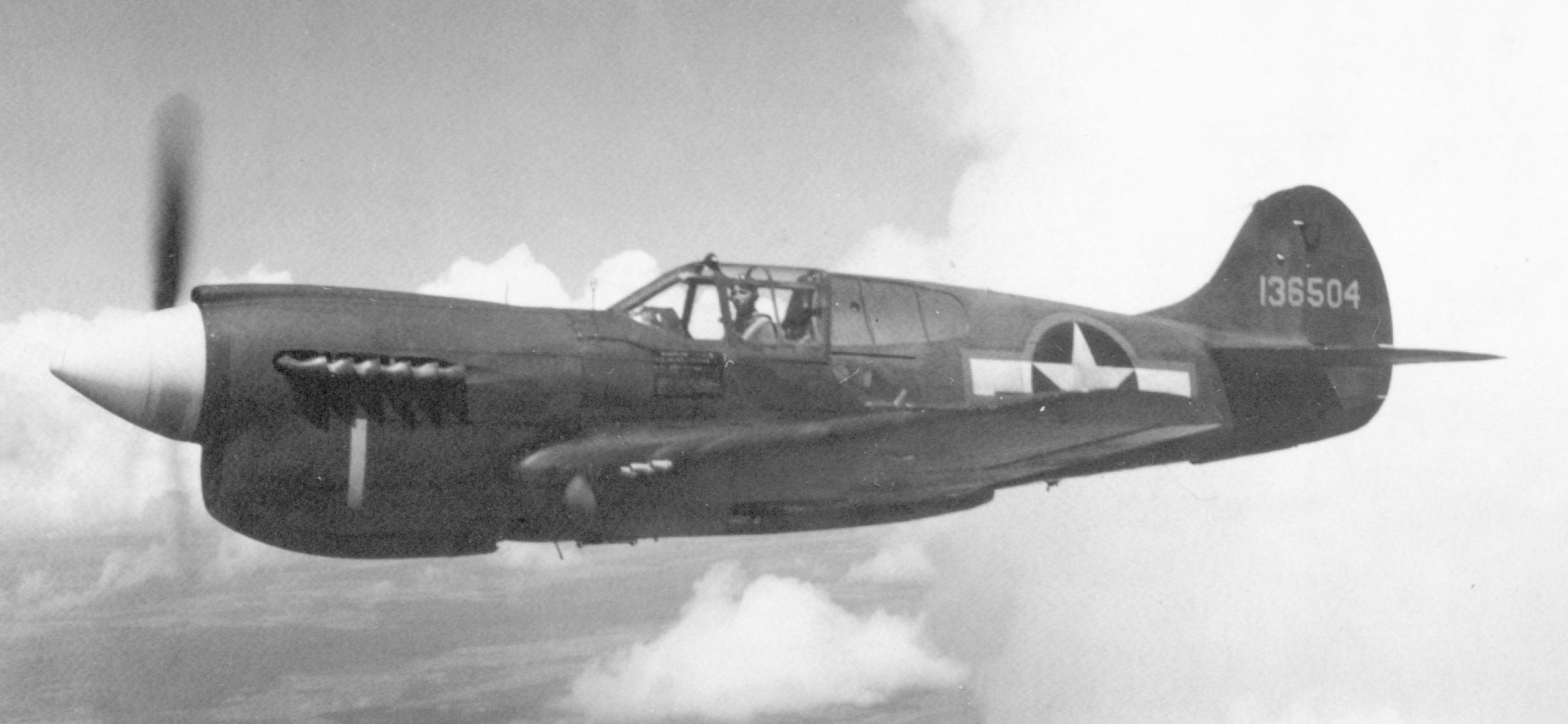
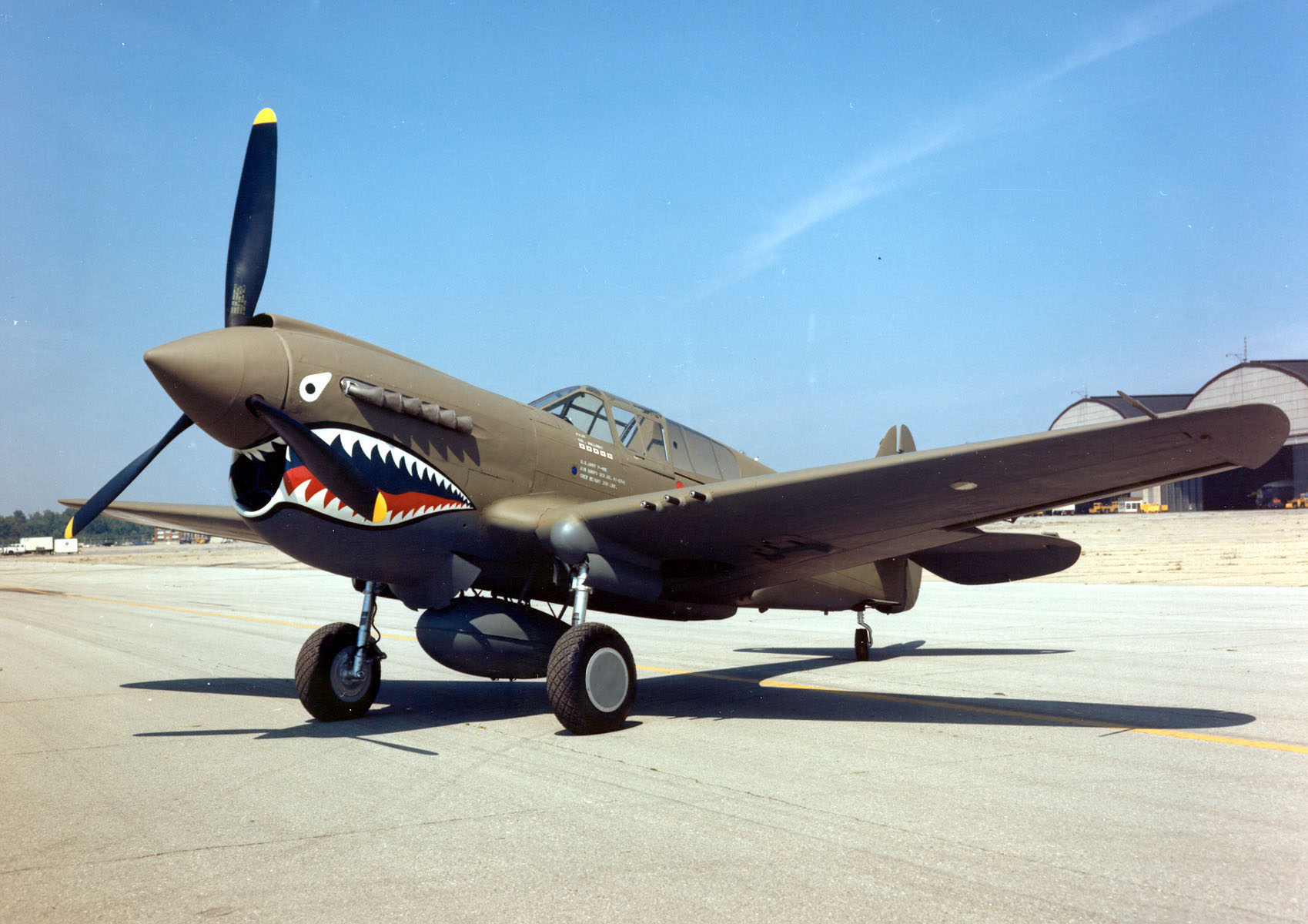
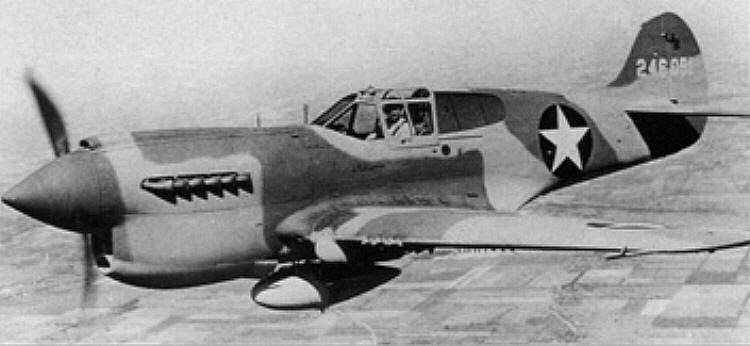
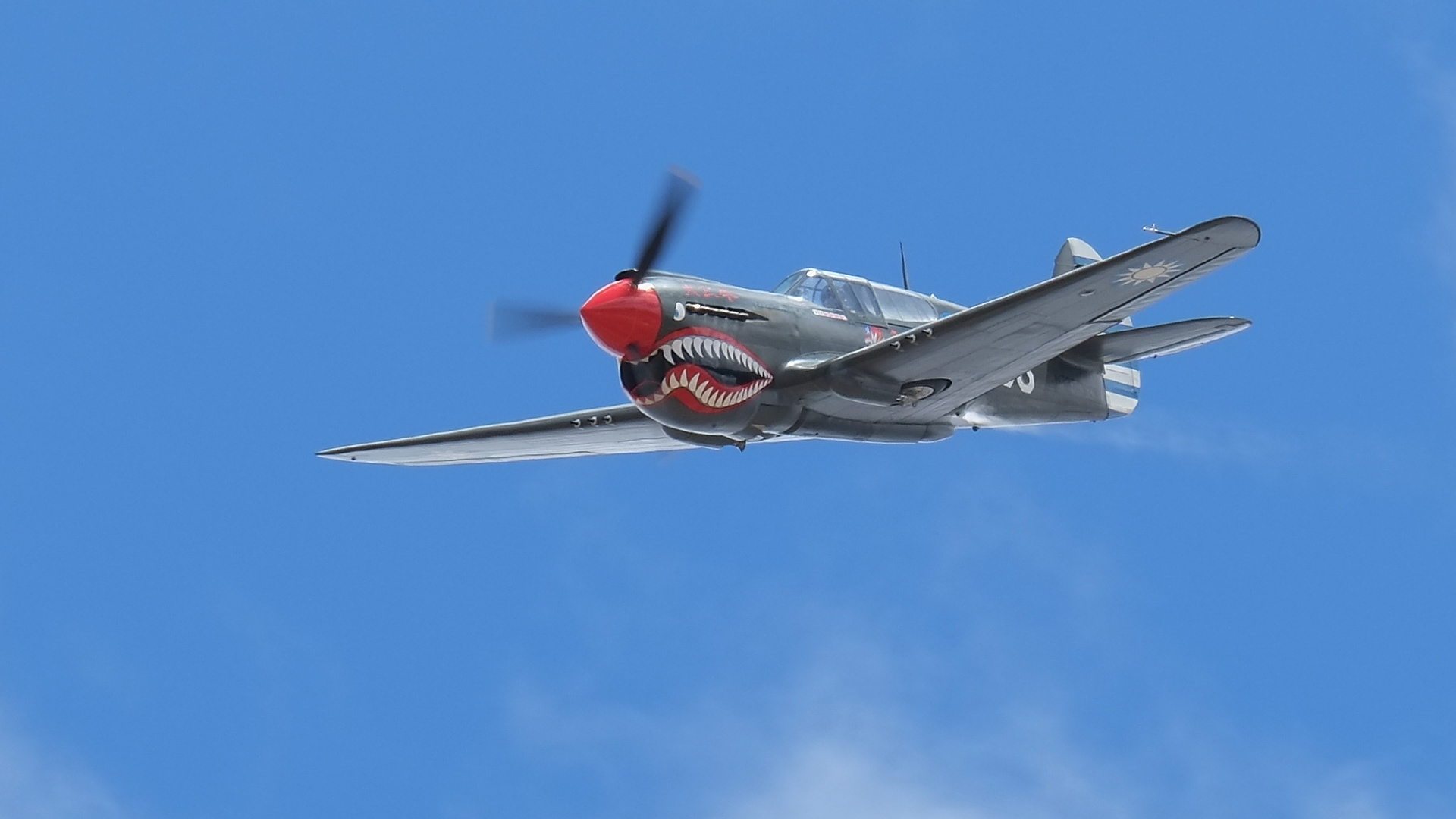
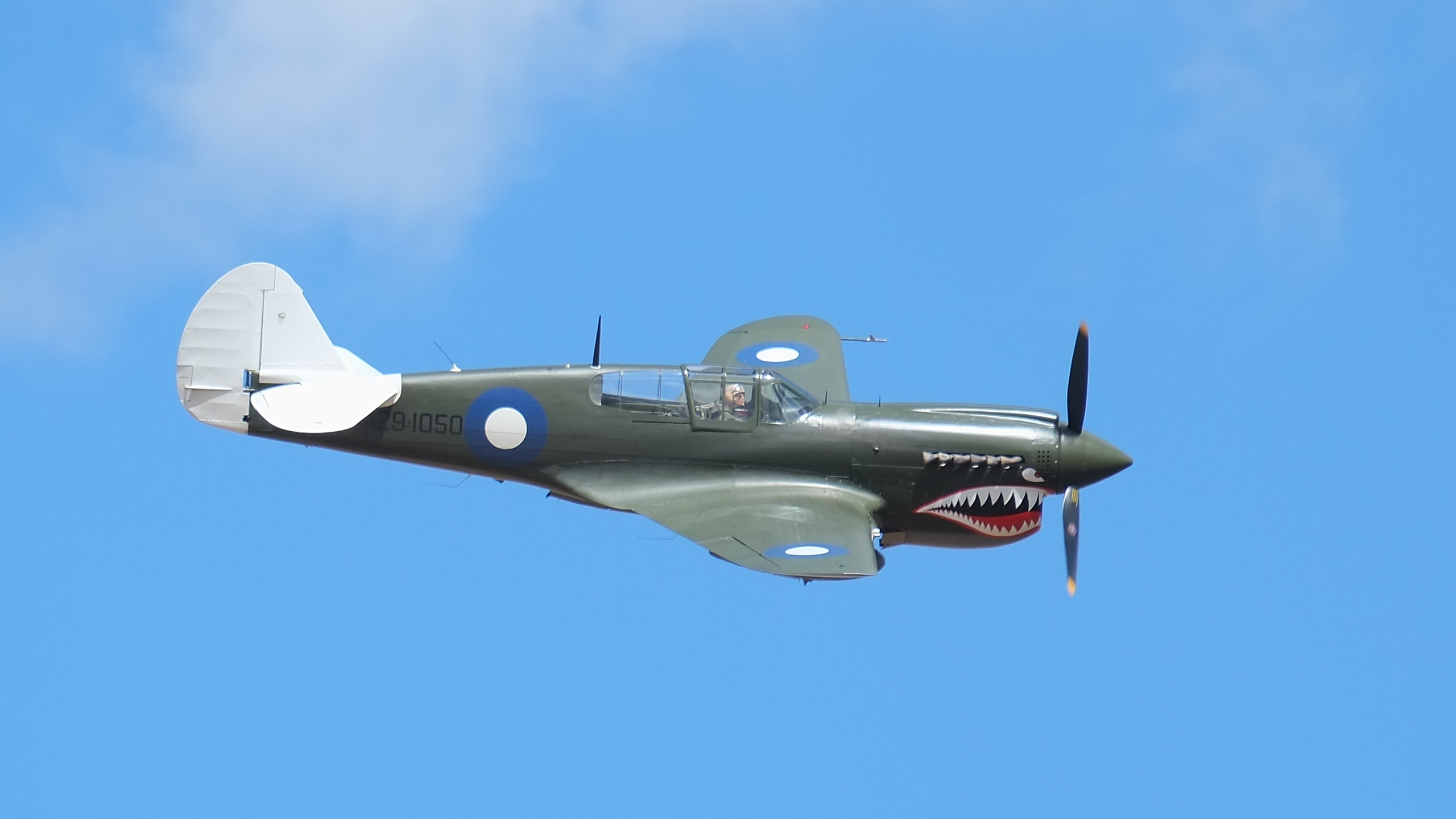
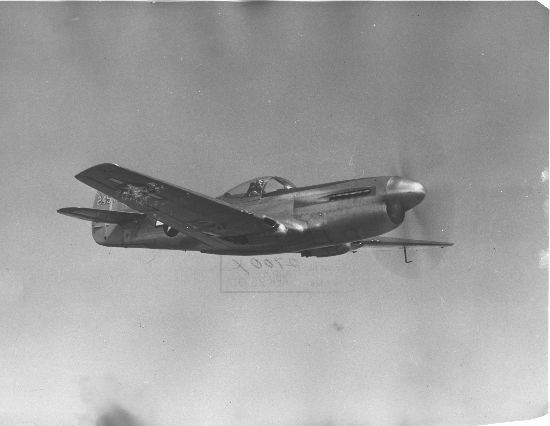
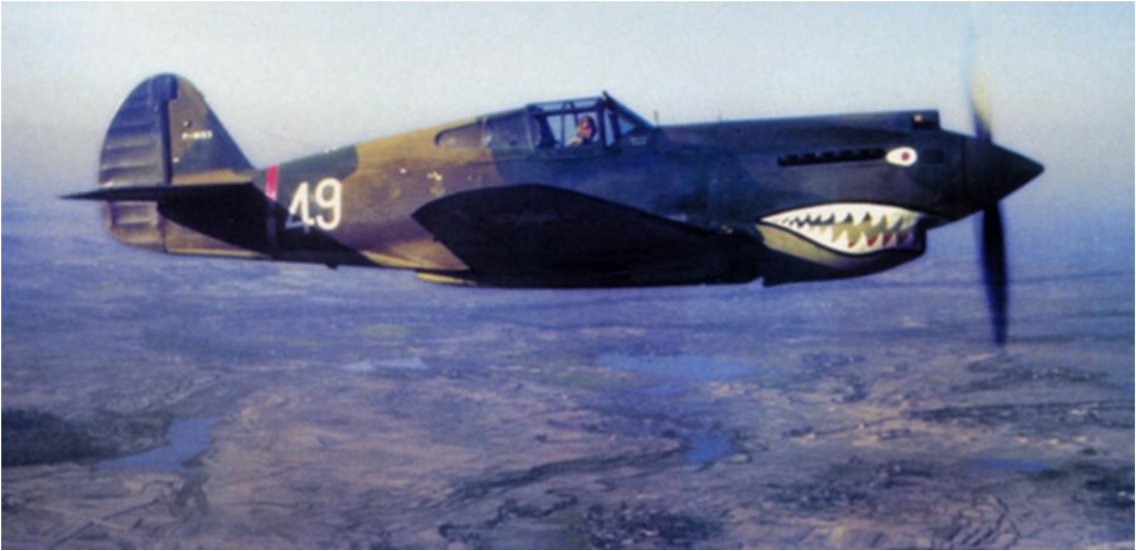
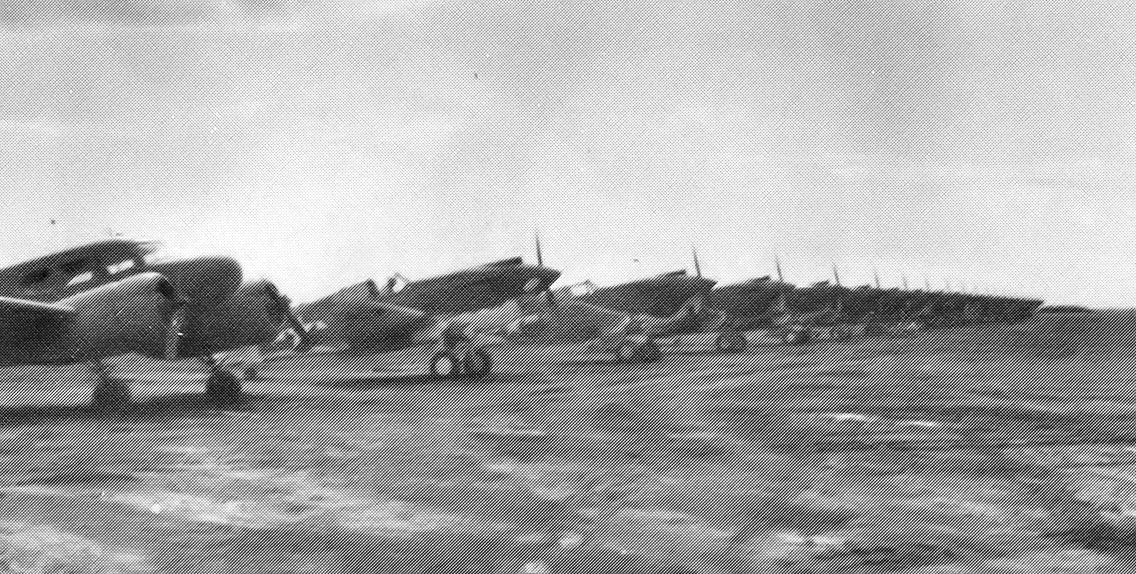
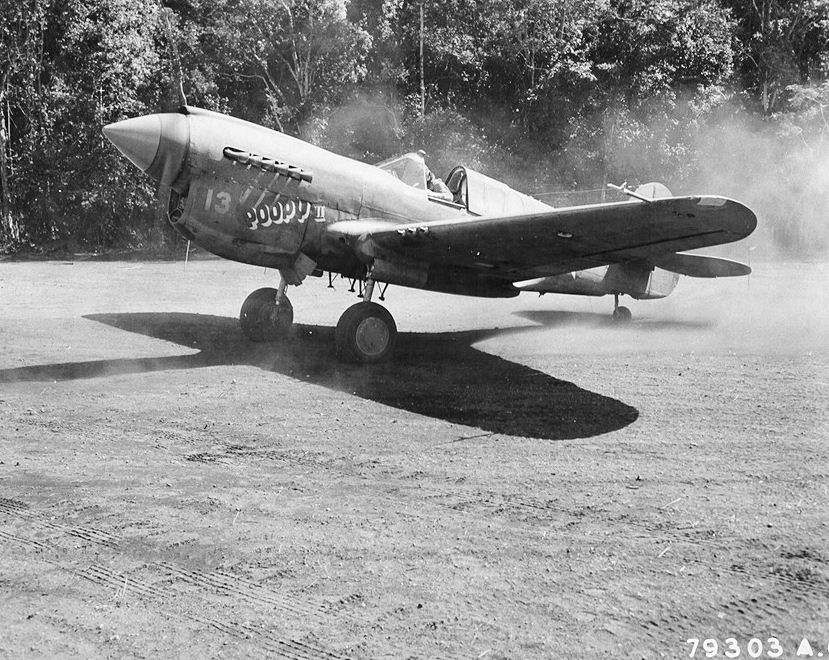
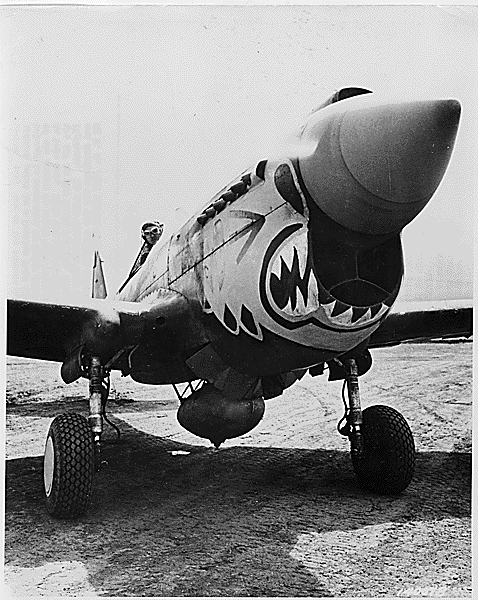
Curtiss built the P-40 by fitting a liquid-cooled Allison V-1710 to the airframe of the P-36 Hawk. The XP-40 first flew on 14 October 1938. The first production aircraft followed on 4 April 1940, and Army squadrons began receiving the type later that year. It was never the fastest or the highest-climbing fighter of the war. It was available in numbers when better types were not.
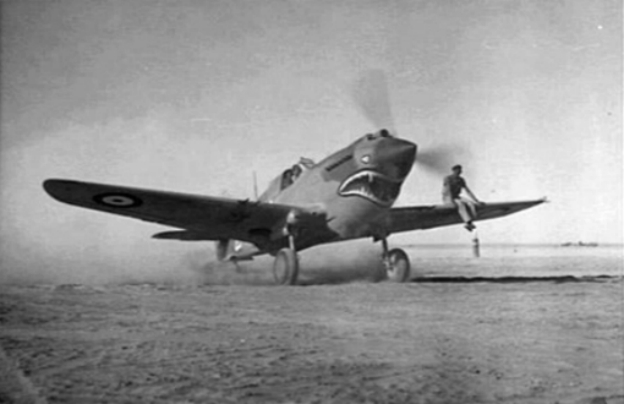
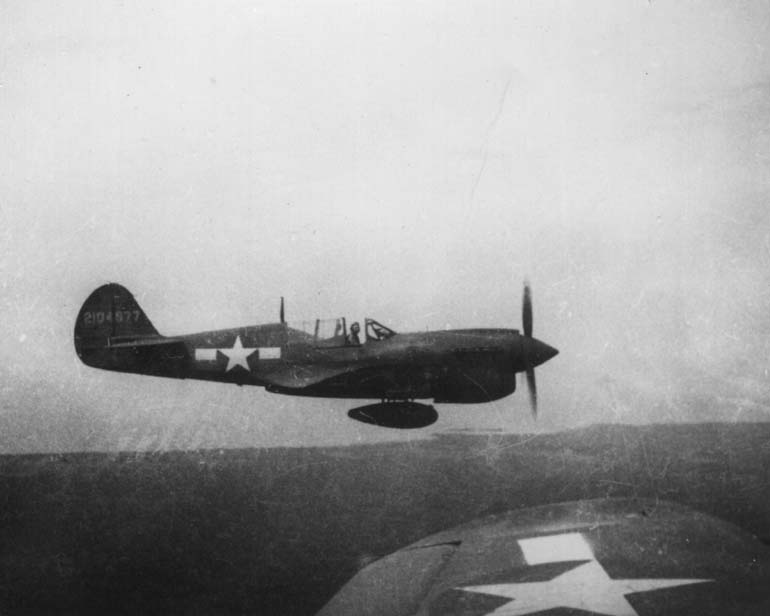
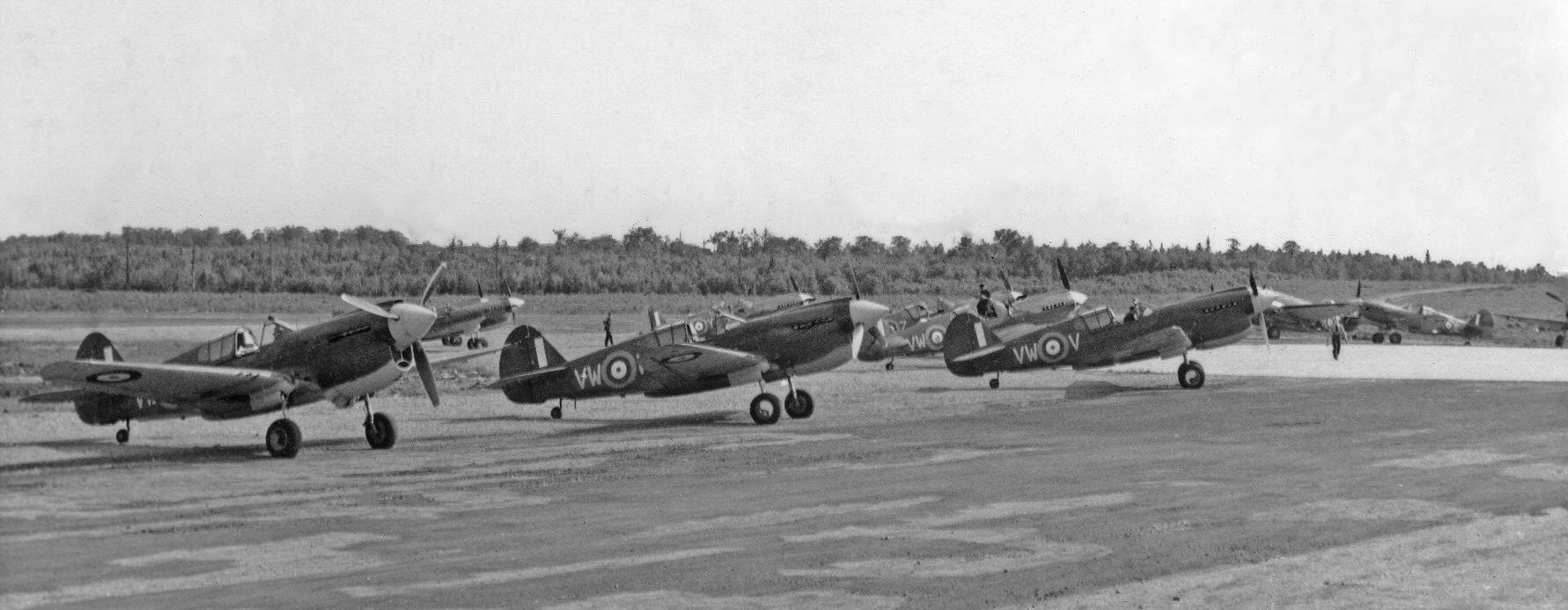
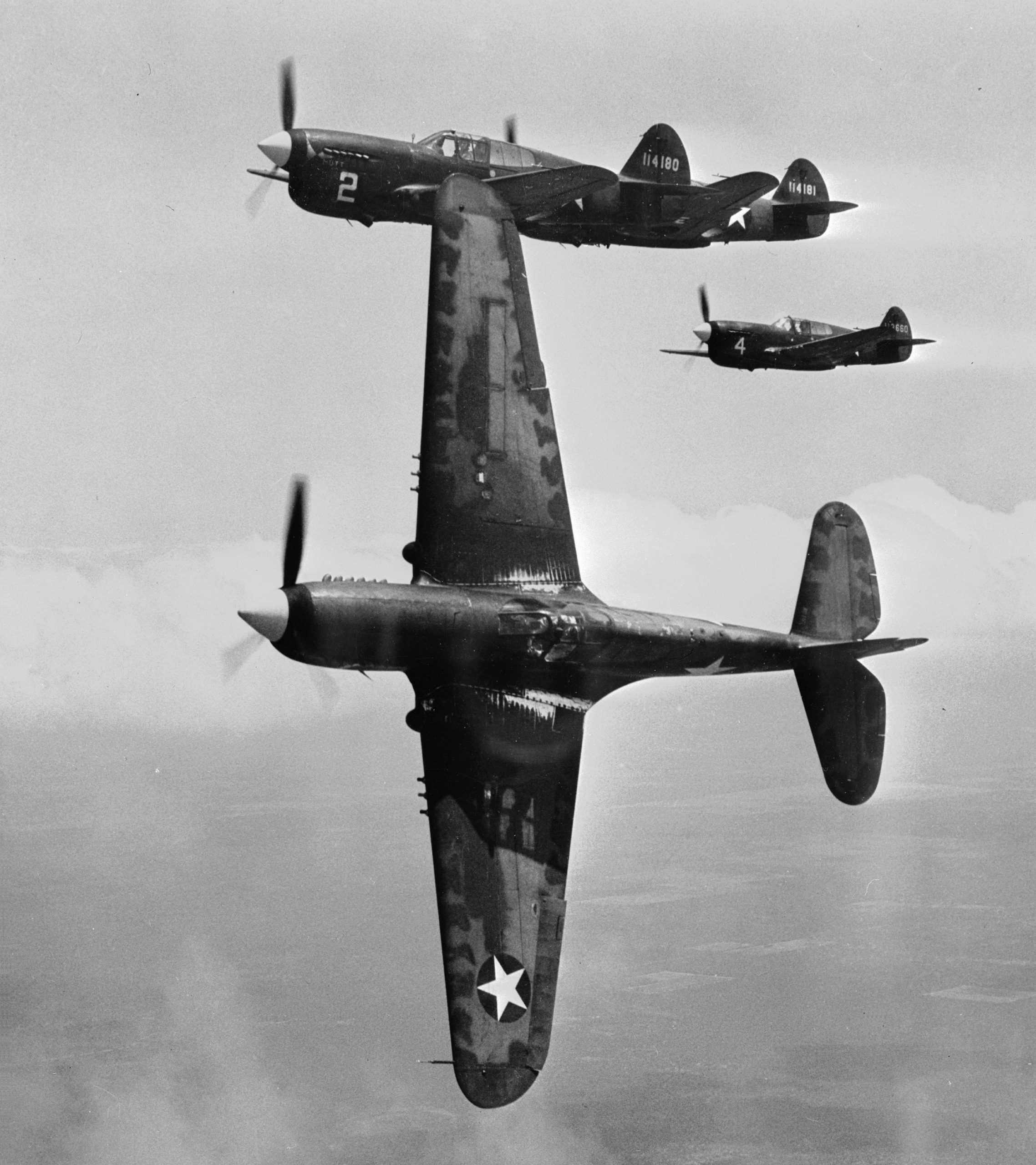
The same airplane carried three names. Early models, the P-40 through P-40C, were Tomahawks in British and Commonwealth service. From the redesigned P-40D onward, export aircraft were Kittyhawks. The U.S. Army called the family Warhawk. Later versions moved the guns into the wings, usually six .50-caliber machine guns, added armor and self-sealing tanks, and hung bombs or a drop tank under the fuselage and wings. Most kept the Allison. The P-40F and P-40L used a Packard-built Merlin.
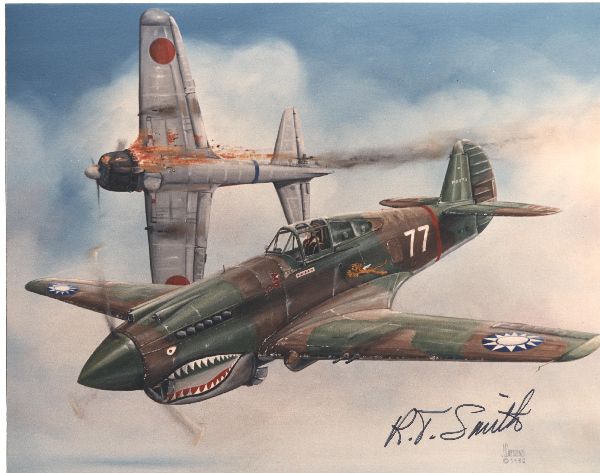
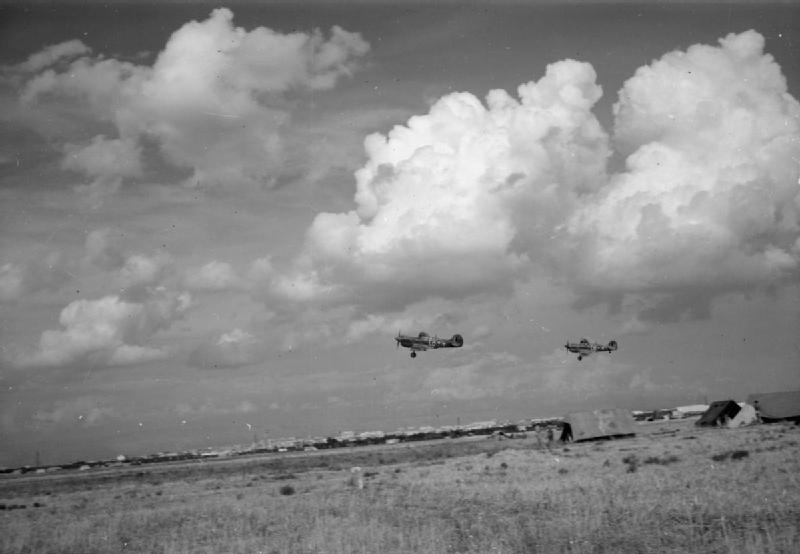
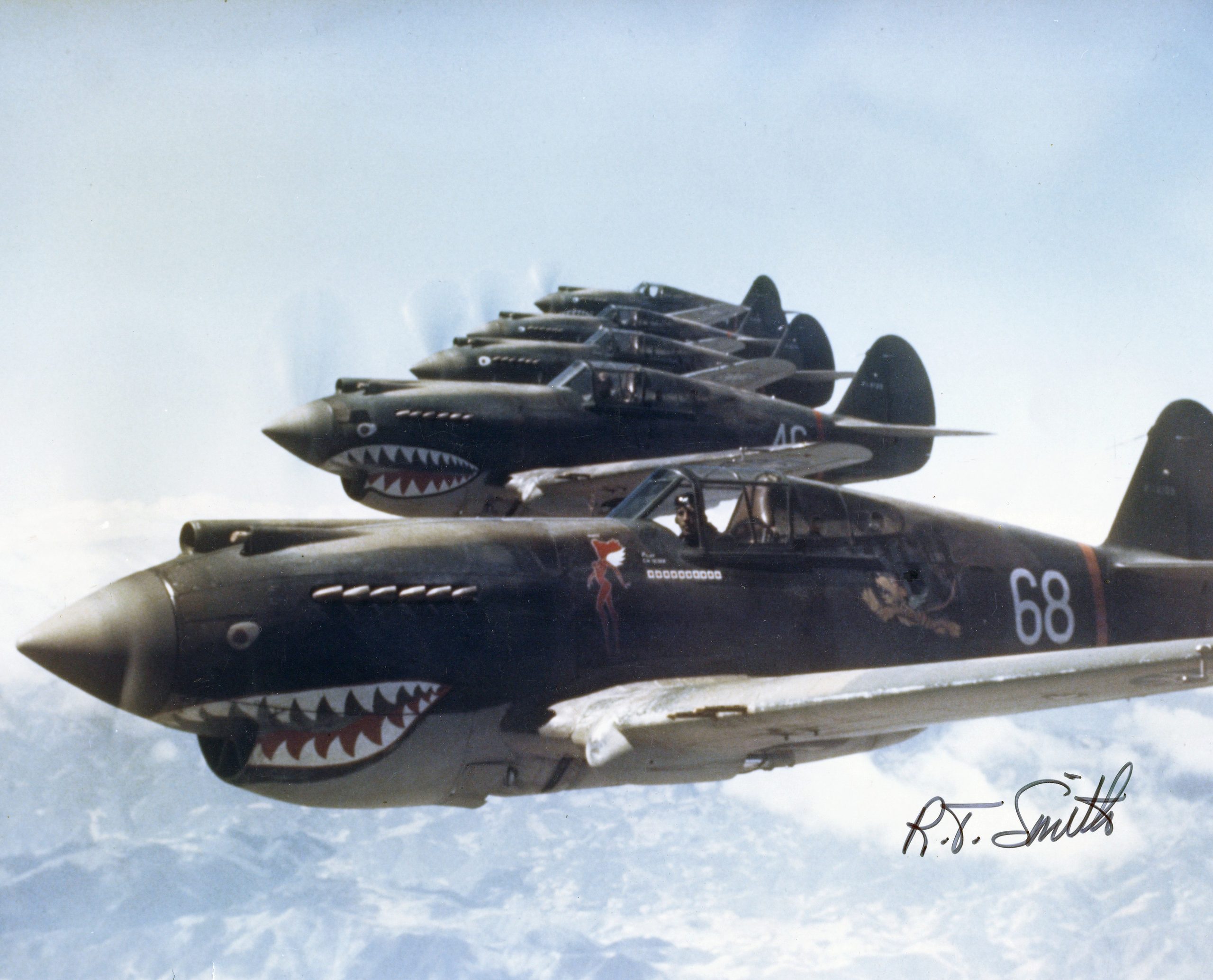
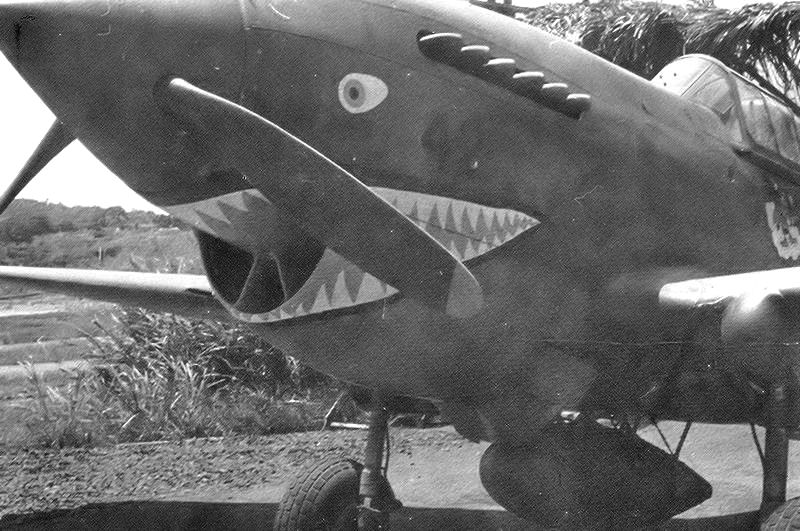
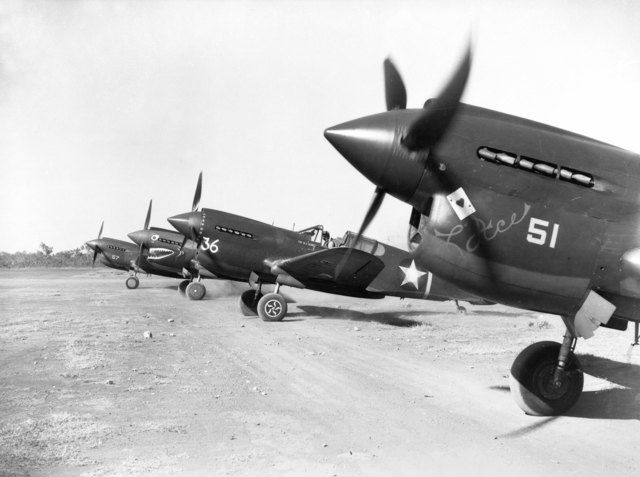
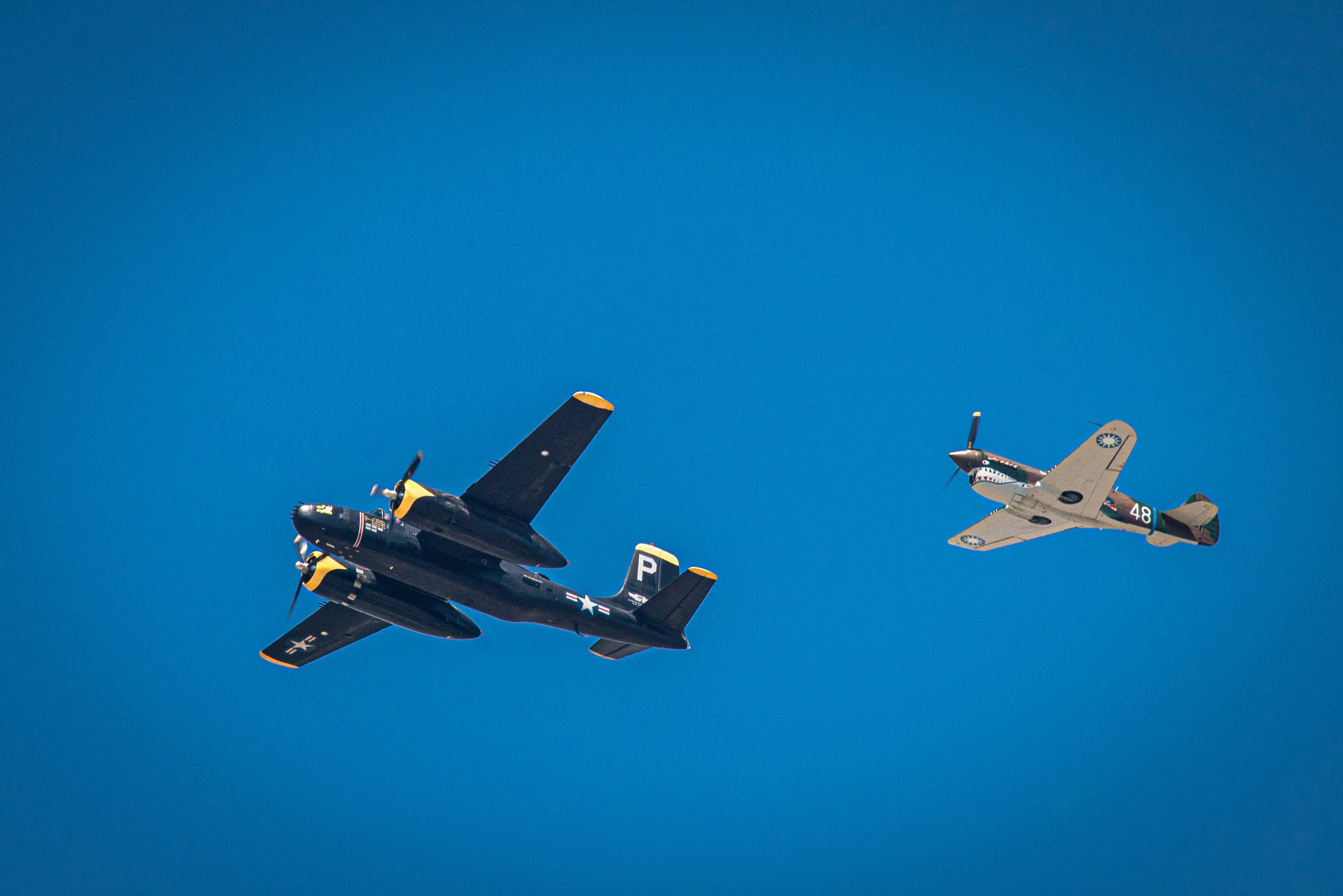
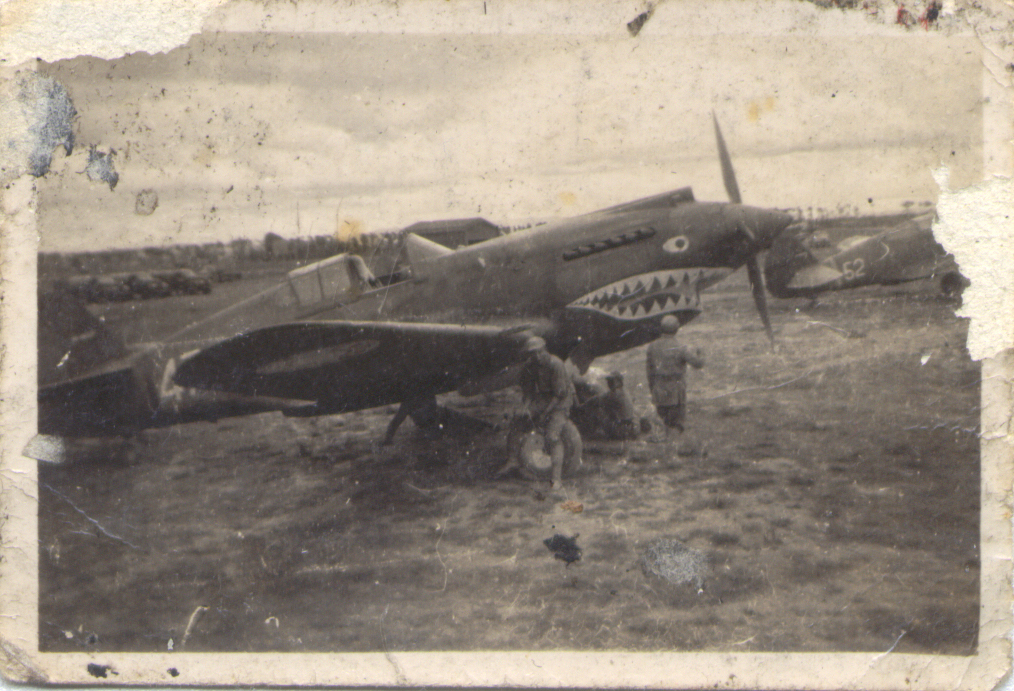
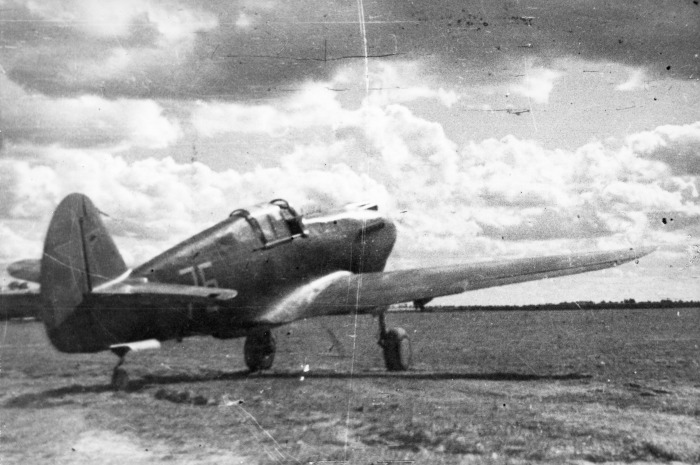
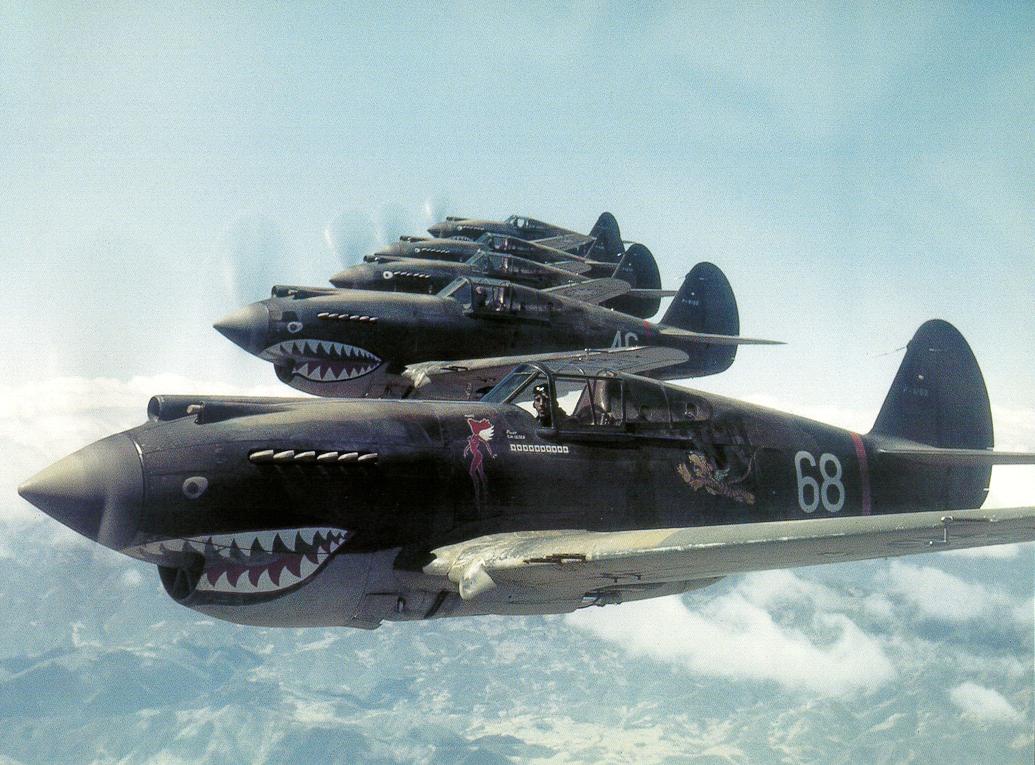
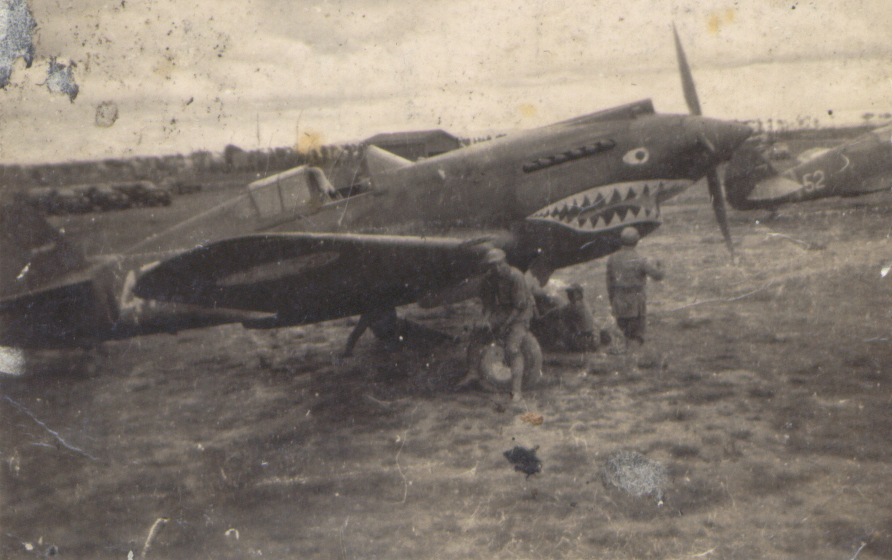
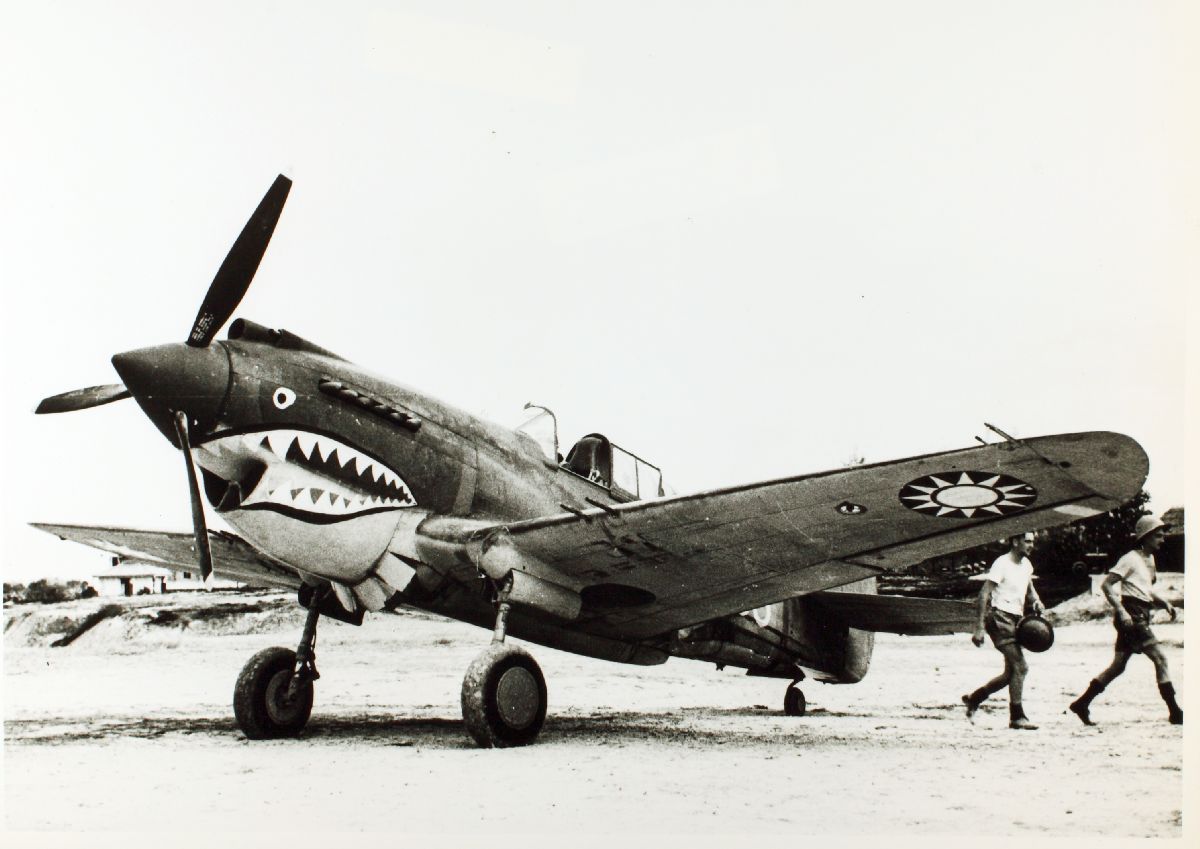
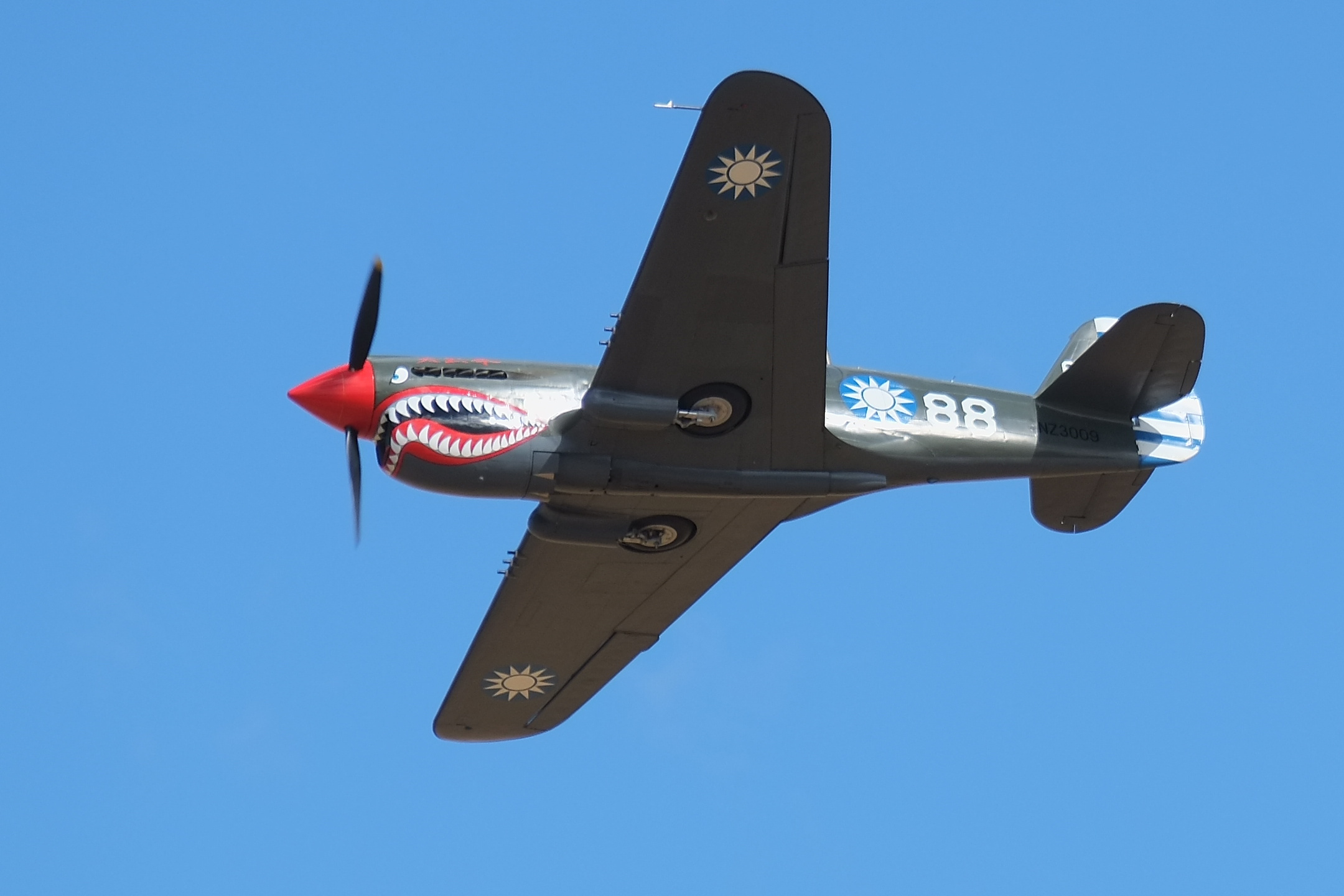
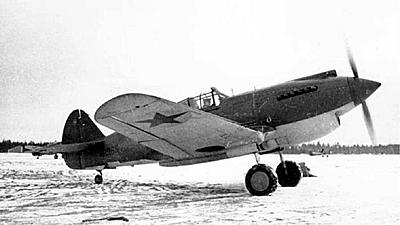
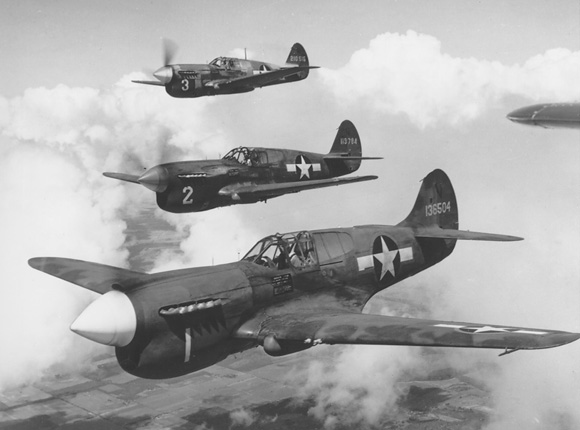
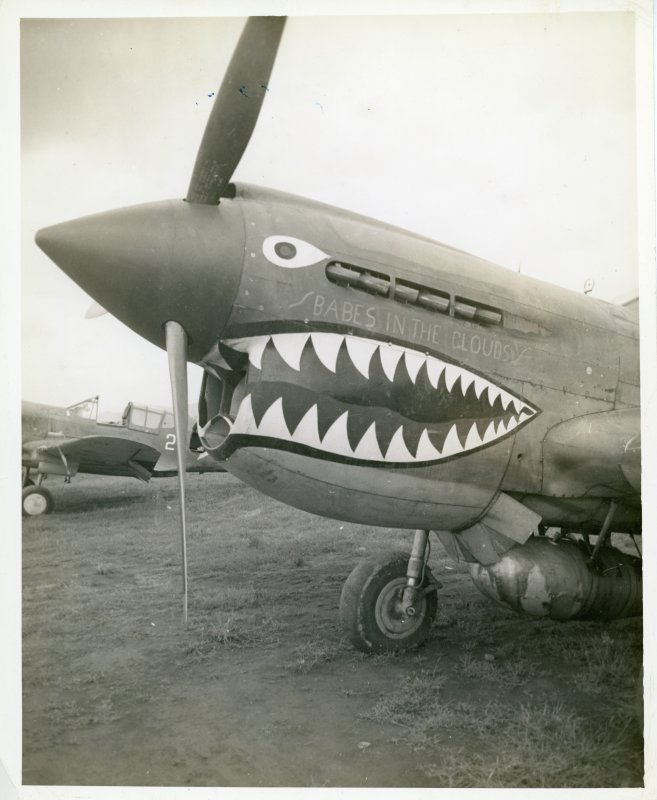
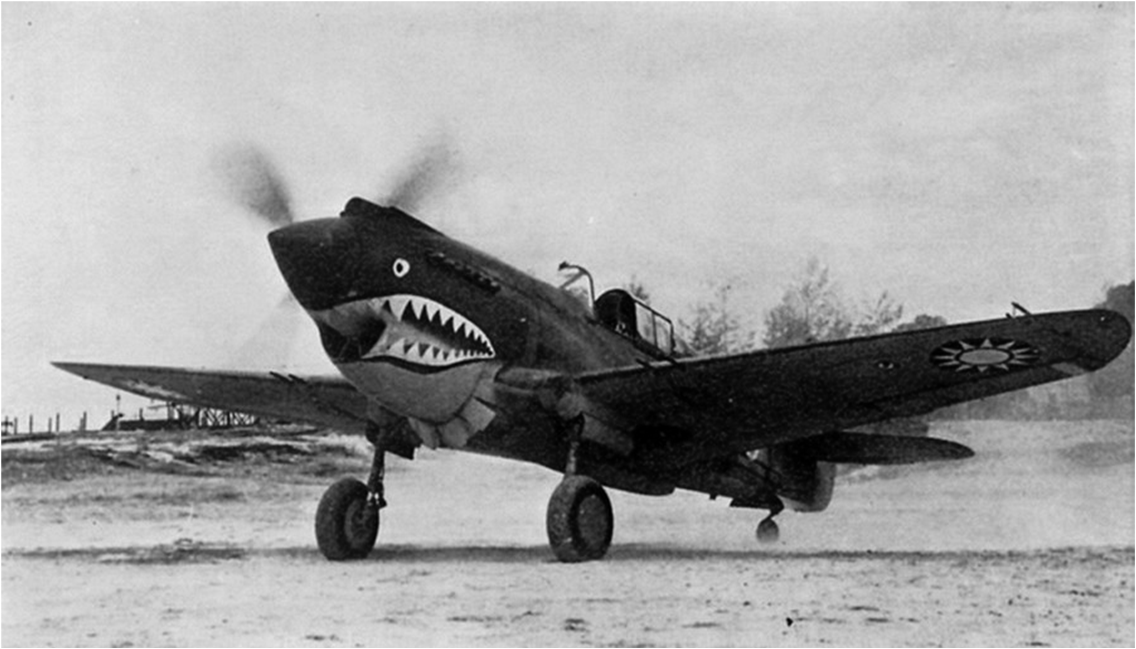
It fought almost everywhere the Allies did in the early war. American Volunteer Group pilots, the Flying Tigers, flew shark-mouthed P-40s over China and Burma in 1941 and 1942. British and Commonwealth squadrons used Tomahawks and Kittyhawks in North Africa. U.S. units flew it in the Pacific, Alaska, and the Mediterranean. The Soviet Union took more than 2,000 under Lend-Lease and used them mainly for low-level attack.
The P-40 could not match a Zero or a Bf 109 in a climb or at high altitude. It was tough, it rolled well, and it held together in a dive. Pilots who stayed fast and avoided a turning fight got results. Production ended in November 1944 after 13,738 aircraft, the third-most numerous U.S. fighter of the war. Newer types took the front line. The Warhawk had already done the job it was built for.
P-40E (published figures; later models differ)
- Crew: 1
- Powerplant: 1 × Allison V-1710-39, about 1,150 hp
- Wingspan: 37 ft 4 in
- Length: 31 ft 9 in
- Height: 12 ft 4 in
- Empty weight: about 6,350 lb
- Max takeoff weight: about 9,200 lb
- Armament: 6 × .50-caliber machine guns; up to about 1,000 lb of bombs on early E models
- Max speed: about 360 mph
- Range: about 650 miles (longer with a drop tank)
- Service ceiling: about 29,000 ft
- Built (all variants): 13,738
- First flight: 14 October 1938 (XP-40); 4 April 1940 (production)
- Initial operational capability: 1940
- Production ended: November 1944