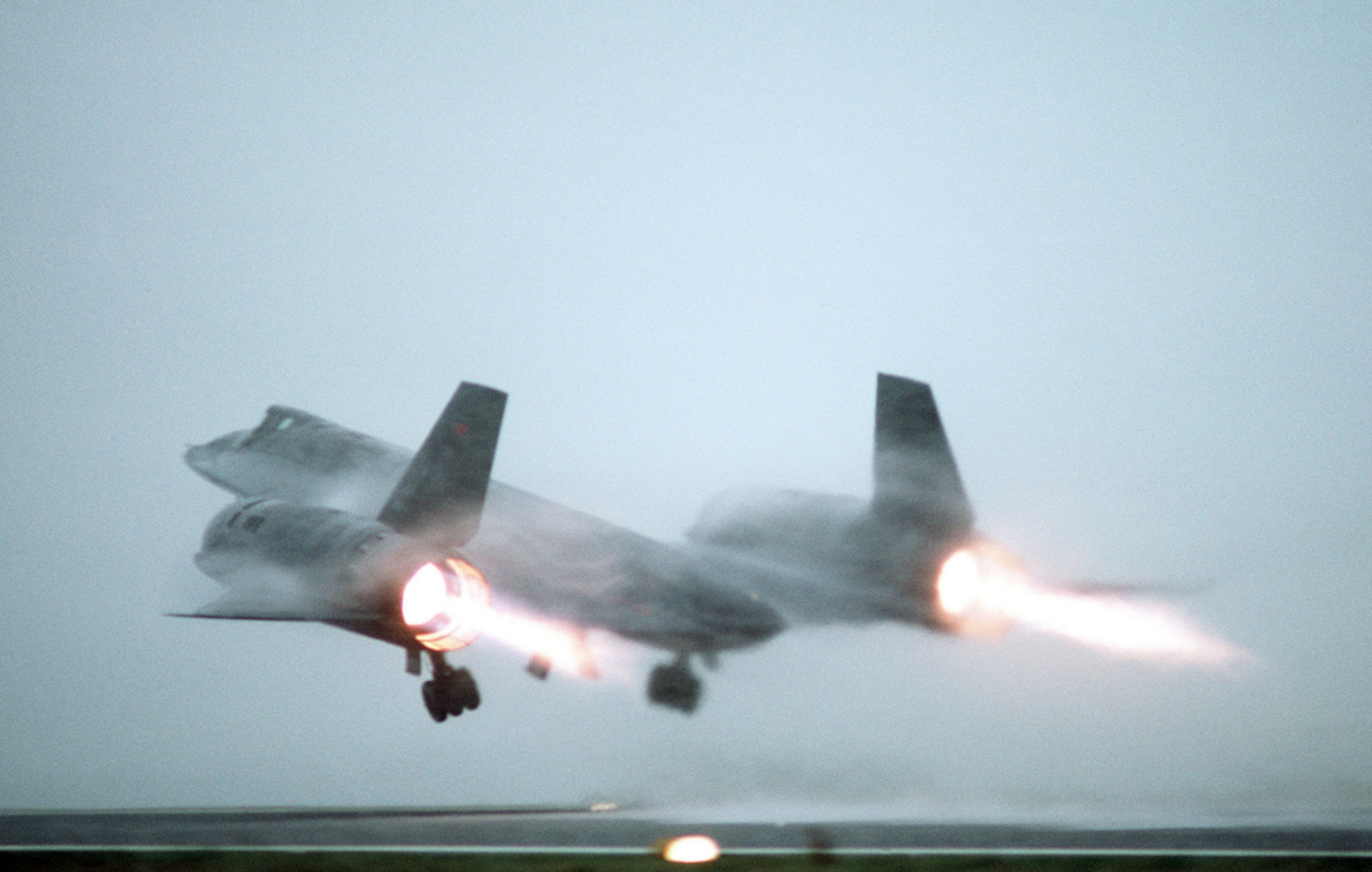


The Lockheed SR-71 Blackbird: Built to Outrun Every Threat
Developed by Lockheed’s Skunk Works under Kelly Johnson in the early 1960s, the SR-71 Blackbird was designed to fly reconnaissance missions so fast and so high that no missile or interceptor of its era could catch it. Its titanium airframe, much of it milled from metal secretly purchased through Soviet intermediaries, could withstand skin temperatures exceeding 500 degrees Fahrenheit generated by air friction at cruising speed.
The Blackbird’s standard evasion tactic when threatened wasn’t maneuvering, it was simply accelerating away. Over its operational life from 1966 to 1998, no SR-71 was ever shot down despite thousands of surface-to-air missiles fired at it during missions over hostile territory. Pilots and crew wore modified space suits since the aircraft cruised at altitudes above 80,000 feet, well into the stratosphere.
The Air Force retired the SR-71 in 1990 due to its high operating costs, though the Air Force and NASA briefly reactivated a handful of airframes in the mid-1990s before its final retirement in 1998. Its reconnaissance role was gradually taken over by reconnaissance satellites, along with the continued service of the Lockheed U-2 and the later arrival of the RQ-4 Global Hawk, though no aircraft since has matched the Blackbird’s combination of speed and altitude.
Aircraft: Lockheed SR-71A Blackbird
- Length: 107 ft 5 in (32.7 m)
- Wingspan: 55 ft 7 in (16.9 m)
- Height: 18 ft 6 in (5.6 m)
- Empty weight: 67,500 lb (30,617 kg)
- Engines: two Pratt & Whitney J58 turbojets, 32,500 lb thrust each with afterburner
- Top speed: over Mach 3.2 (2,200+ mph / 3,540+ km/h)
- Range: 3,200 mi (5,150 km)
- Service ceiling: 85,000 ft (25,900 m)
- Crew: 2 (pilot and reconnaissance systems officer)