The Lockheed C-141 Starlifter entered service as the U.S. Air Force’s first purpose-built jet-powered strategic airlifter. Designed in the early 1960s to replace slower propeller-driven transports such as the C-124 Globemaster II, it combined high-subsonic speed with the ability to move large quantities of cargo or troops over intercontinental distances. The prototype first flew on December 17, 1963—the 60th anniversary of the Wright brothers’ flight—and production aircraft began operational service in April 1965.


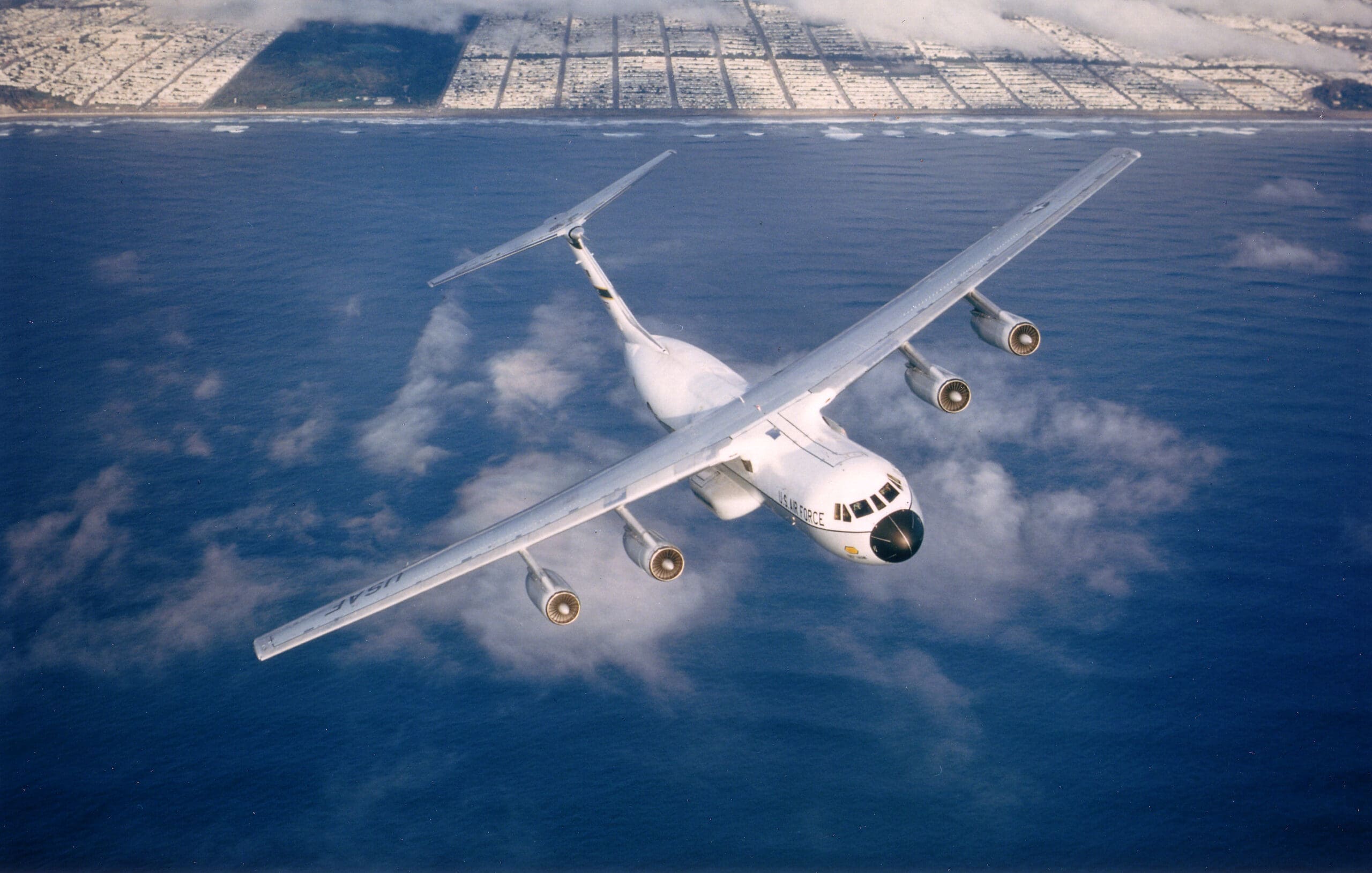


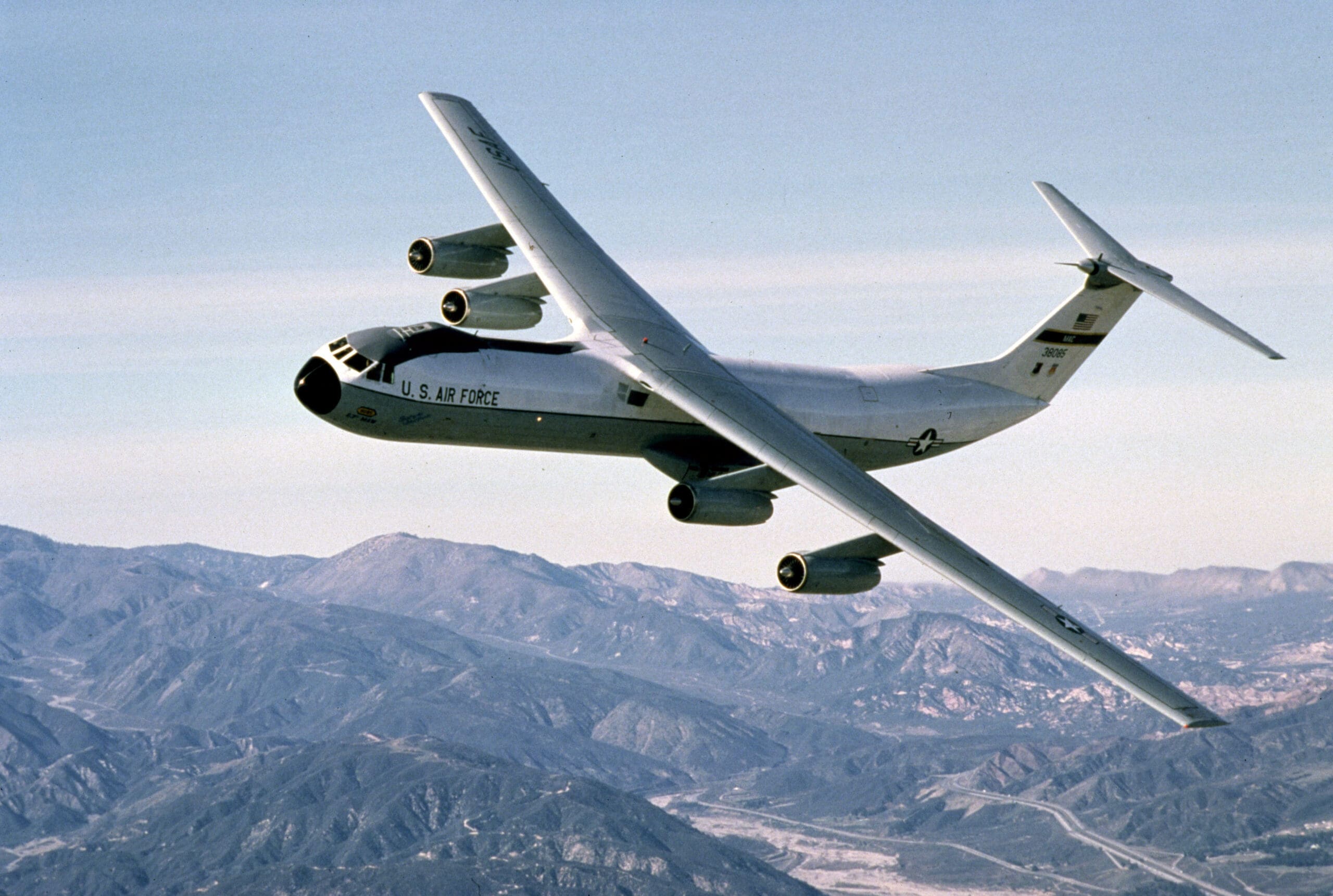


The aircraft featured a high-mounted swept wing with four underwing Pratt & Whitney TF33 turbofan engines, a T-tail, and a pressurized cargo compartment sized to accept standard military pallets and vehicles. A rear clamshell door and ramp allowed rapid loading, airdrop of cargo or paratroops, and efficient ground handling. Early operational experience showed the original C-141A often filled its cargo volume before reaching its structural weight limit. In response, Lockheed stretched the fuselage by 23 feet 4 inches on the majority of the fleet, creating the C-141B. The conversion also added an aerial-refueling receptacle. These changes increased usable volume by roughly one-third and extended practical range. A later C-141C update introduced a glass cockpit, GPS, and improved systems on a portion of the aircraft.
In service the Starlifter became a mainstay of Military Airlift Command (later Air Mobility Command) operations. It flew continuous resupply and troop movements during the Vietnam War, carried returning prisoners of war in Operation Homecoming (most notably the aircraft known as the “Hanoi Taxi”), supported later contingencies including Grenada, Panama, and the 1991 Gulf War, and performed aeromedical evacuation and Antarctic logistics missions. A total of 285 airframes were built between 1963 and 1968 (284 for the Air Force and one NASA demonstrator later used as the Kuiper Airborne Observatory). The type logged millions of flight hours before retirement. The final operational flight, by the Hanoi Taxi, occurred on May 6, 2006, at the National Museum of the U.S. Air Force.
The C-141 demonstrated that a jet airlifter could reliably sustain high utilization rates while carrying mixed loads of personnel, cargo, and medical patients. Its combination of speed, range, and volume set the pattern later refined by the C-17 Globemaster III.
Specifications (C-141B, primary operational variant; figures drawn from U.S. Air Force fact sheets and consistent technical references)
- Primary role: Long-range troop and cargo airlift
- Manufacturer: Lockheed-Georgia Company
- Powerplant: Four Pratt & Whitney TF33-P-7 turbofan engines, 20,250 lbf (90 kN) thrust each
- Length: 168 ft 4 in (51.3 m)
- Wingspan: 160 ft (48.8 m)
- Height: 39 ft 3 in (12.0 m)
- Cargo compartment: 93 ft 4 in long × 10 ft 3 in wide × 9 ft 1 in high (approx.)
- Maximum takeoff weight: 323,100 lb (146,600 kg); higher limits (to ~343,000 lb) available under reduced maneuvering constraints
- Typical maximum payload: ~68,700–90,000+ lb depending on configuration and mission
- Fuel capacity: Approximately 23,600 U.S. gallons
- Maximum speed: Approximately 500–567 mph (Mach 0.66–0.74 class) at altitude
- Cruise speed: Roughly 490–500 mph
- Service ceiling: 41,000 ft (12,500 m)
- Range: Approximately 2,500 miles with maximum payload; ferry range substantially longer; unlimited with aerial refueling
- Rate of climb: On the order of 2,600–2,900 ft/min
- Crew: Typically five or six (two pilots, two flight engineers, one loadmaster; navigator added for airdrop missions)
- Typical loads (C-141B): Up to 200 troops, 155 paratroops, or 103 litters plus seats; or multiple standard 463L pallets
- Number built: 285
- First flight: 17 December 1963
- Operational introduction: April 1965 (C-141A); December 1979 (C-141B)
- Retirement: May 2006