The Hercules was built to solve a problem. Early in the Korean War, the Air Force learned the hard way that its piston-engine transports, such as the C-47 and C-119, were too slow, too limited in what they could carry, and poorly suited to rough forward airstrips.
On February 2, 1951, the Air Force sent aircraft makers a requirement for a purpose-built combat transport. It had to carry 92 troops, 64 paratroopers, or roughly 30,000 lb of cargo, load through a rear ramp, and operate from short, unpaved fields. Turboprop power made the numbers work. Lockheed’s Burbank team, with engineer Willis Hawkins leading the effort, submitted its Model L-206 and won the contract that July.
Lockheed built two YC-130 prototypes in Burbank. Oddly, the second one, serial 53-3397, flew first. On August 23, 1954, test pilots Stanley Beltz and Roy Wimmer lifted it off at Burbank and landed at Edwards AFB 61 minutes later.
The Air Force had found its airlifter.
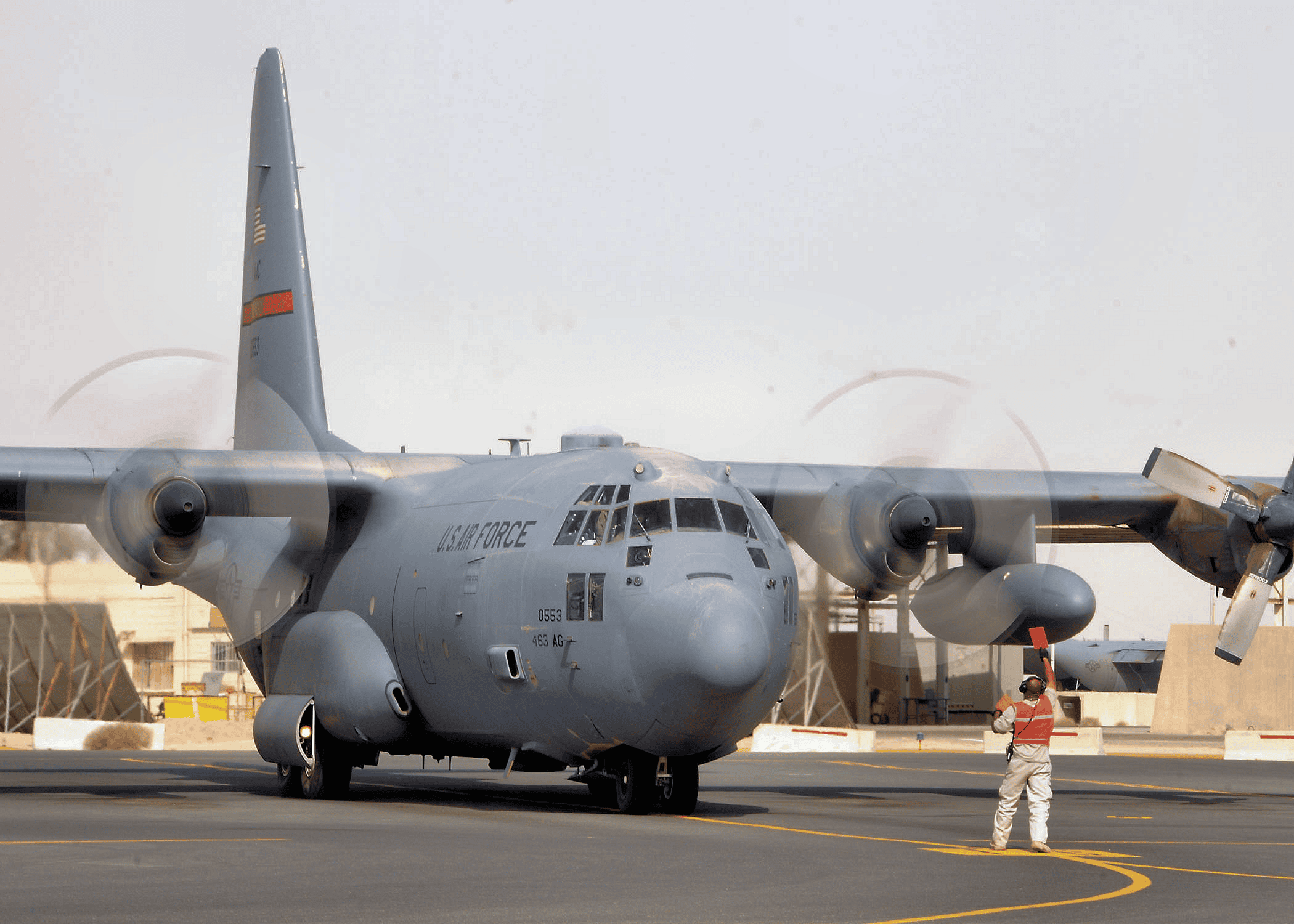
Production shifted to Lockheed’s plant in Marietta, Georgia, where the first production C-130A flew on April 7, 1955. On December 9, 1956, the 463rd Troop Carrier Wing at Ardmore AFB, Oklahoma, received the first operational aircraft. That very first delivery, nicknamed “City of Ardmore,” survived combat damage in Vietnam and flew until 1989. It is now preserved at Dyess AFB, Texas.
Why It Endured
Lockheed got the fundamentals right from the start. The high wing keeps engines and props clear of debris, four turboprops give power and redundancy, the rear ramp lets vehicles drive straight in, and the sturdy landing gear handles dirt and gravel. Seven decades later, that basic layout is unchanged.
More than 2,700 Hercules have been built for operators in about 70 countries. The type marked 70 years since first flight in 2024, and its production run is the longest of any military aircraft in history.
Constant Evolution
- C-130A/B/E/H: The “legacy” family, produced from the mid-1950s into the 1990s. The Air Force ordered 219 C-130As, and the H model became the most numerous version, with well over 1,000 built.
- C-130J Super Hercules: First flew April 5, 1996, and entered service in 1999. It is the only version still in production.
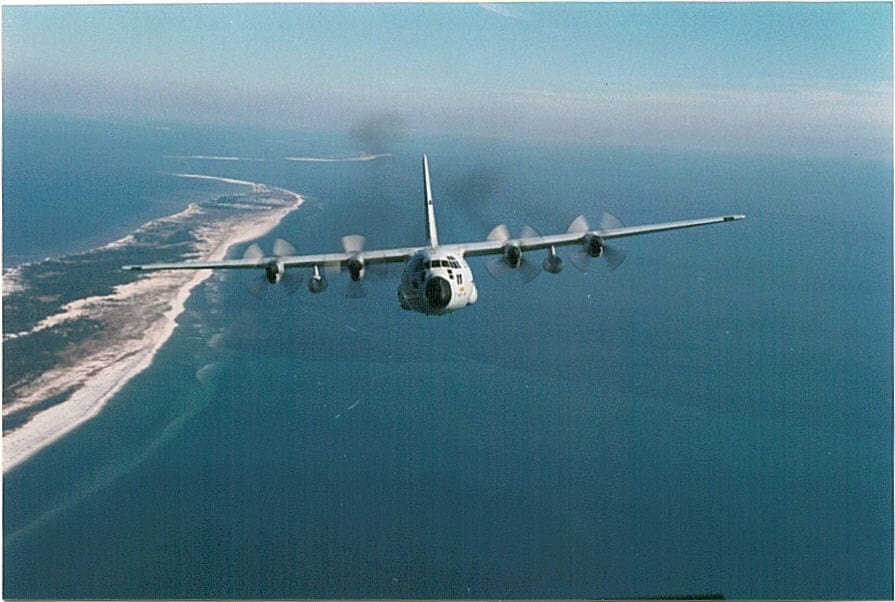
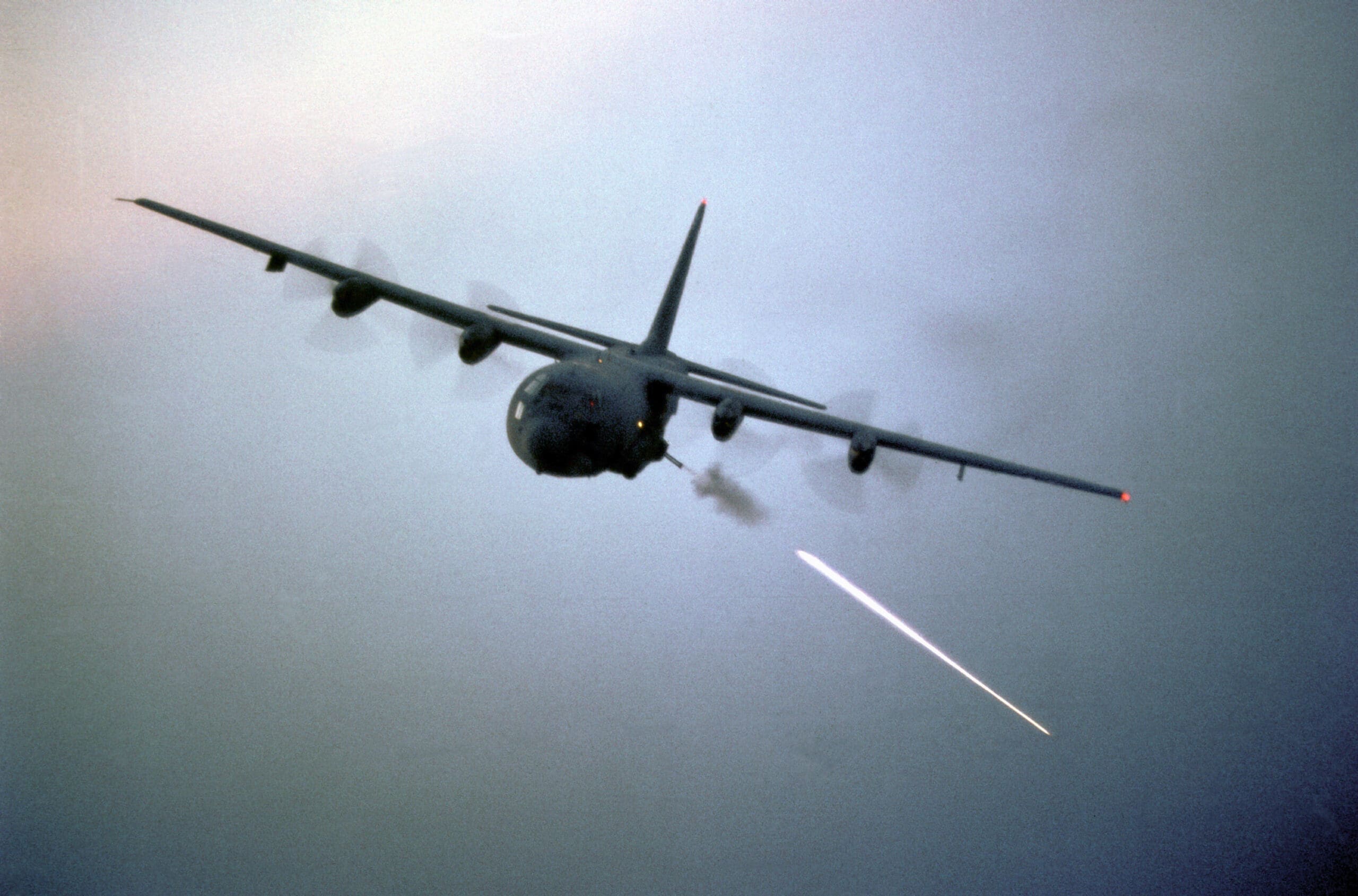
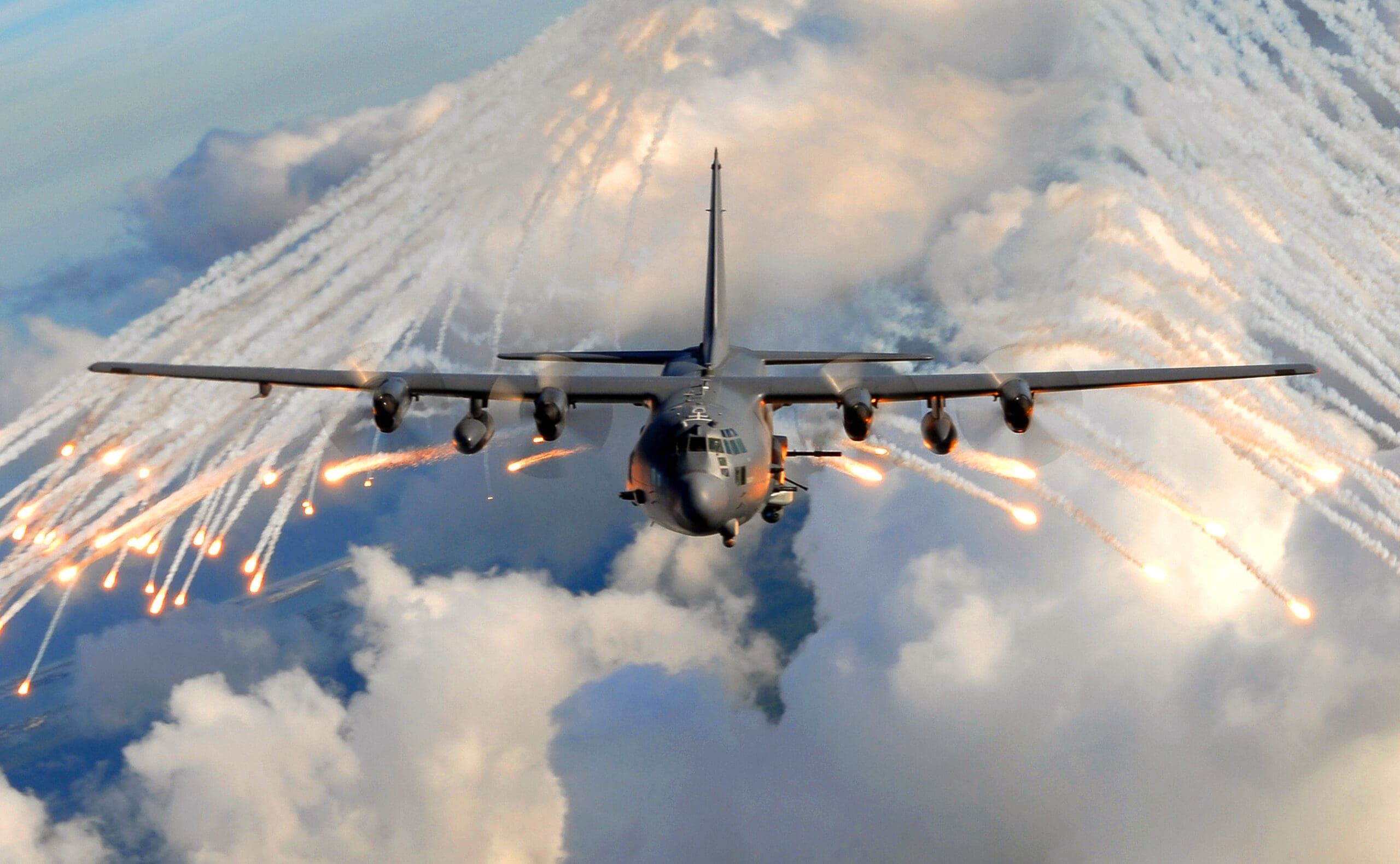
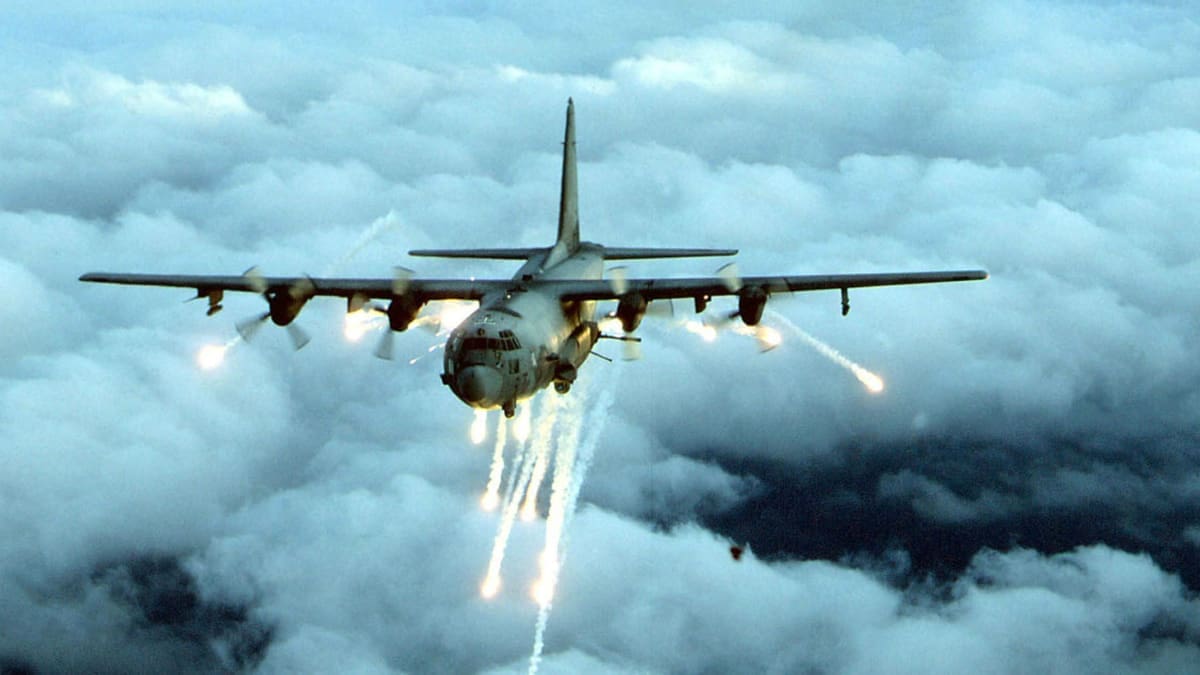
- Special Missions: AC-130 gunship, KC-130 tanker, MC-130 special operations, HC-130 search and rescue, LC-130 ski-equipped polar transport, WC-130 hurricane hunter, and the civilian L-100 and LM-100J.
Stats – Latest Version: C-130J / C-130J-30
From the outside, the J looks a lot like its predecessors. Underneath, almost everything is new: Rolls-Royce AE 2100D3 engines turning six-blade composite Dowty R391 propellers, a fully digital glass cockpit with a head-up display for each pilot, and automation that removes the need for a navigator and flight engineer. Lockheed says that compared with the C-130E/H, the J flies about 40% farther, about 21% faster, and needs about 41% less runway to take off.









General Characteristics
- Crew: 3 minimum (2 pilots + 1 loadmaster)
- Max payload: 42,000 lb (19,050 kg); J-30: 44,000 lb (19,958 kg)
- Length: 97 ft 9 in (29.79 m); J-30: 112 ft 9 in (34.37 m)
- Wingspan: 132 ft 7 in (40.41 m)
- Height: 38 ft 10 in (11.84 m)
- Capacity (C-130J): 92 troops, 64 paratroopers, 74 litter patients, or 6 cargo pallets
- Capacity (C-130J-30): 128 troops, 92 paratroopers, 97 litter patients, or 8 cargo pallets
- Powerplant: 4 × Rolls-Royce AE 2100D3 turboprops, 4,637 shp each
- Max takeoff weight: 155,000 lb normal (J) / 164,000 lb (J-30); up to 175,000 lb under reduced maneuvering limits
Performance
- Max speed: 362 knots (417 mph / 671 km/h) at 22,000 ft
- Cruise speed: 348 knots (400 mph / 644 km/h)
- Range: about 2,835 nmi (3,262 mi / 5,250 km) with a reduced payload
- Takeoff distance: 3,127 ft at 155,000 lb gross weight
- Service ceiling: 28,000 ft with a 42,000 lb payload