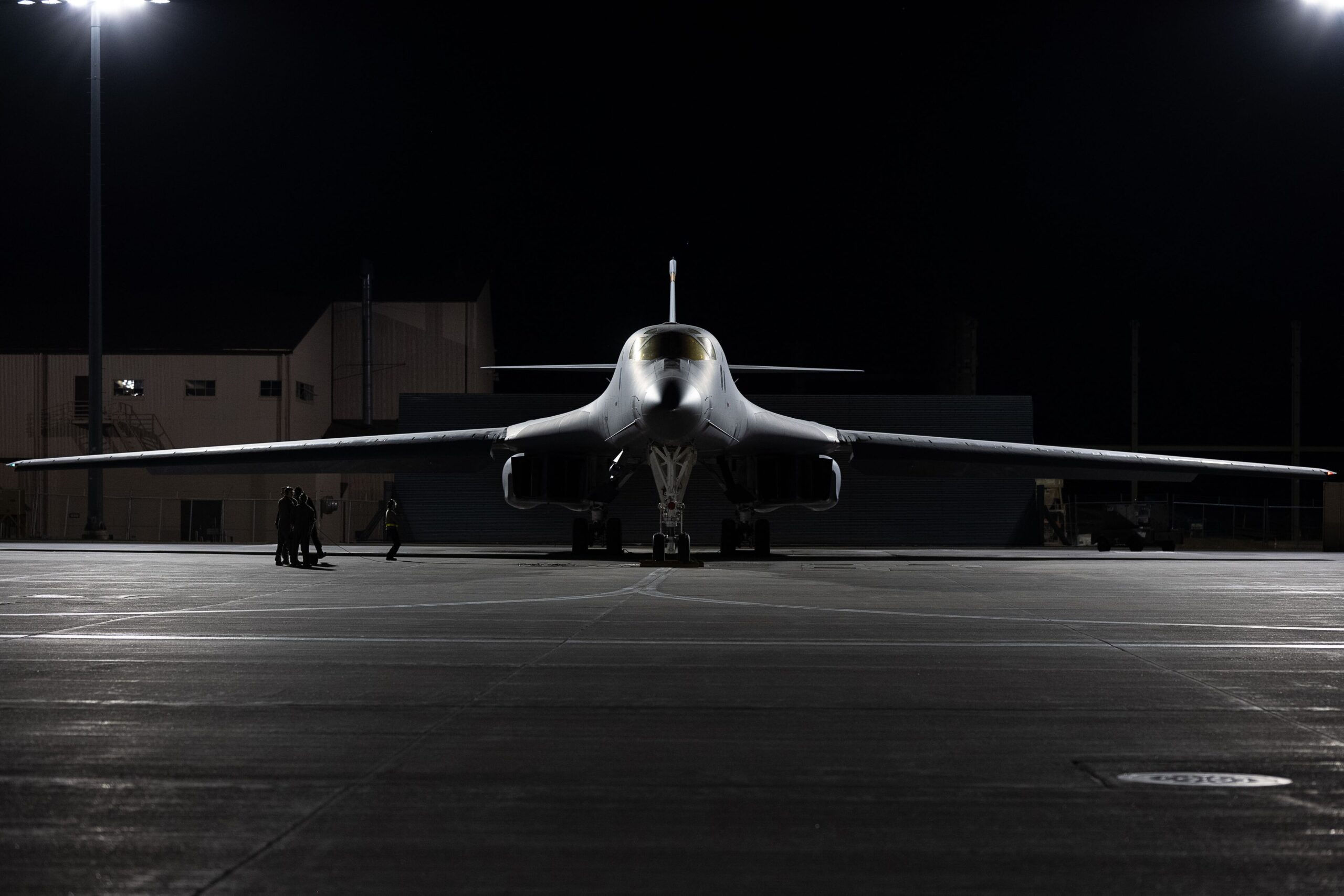


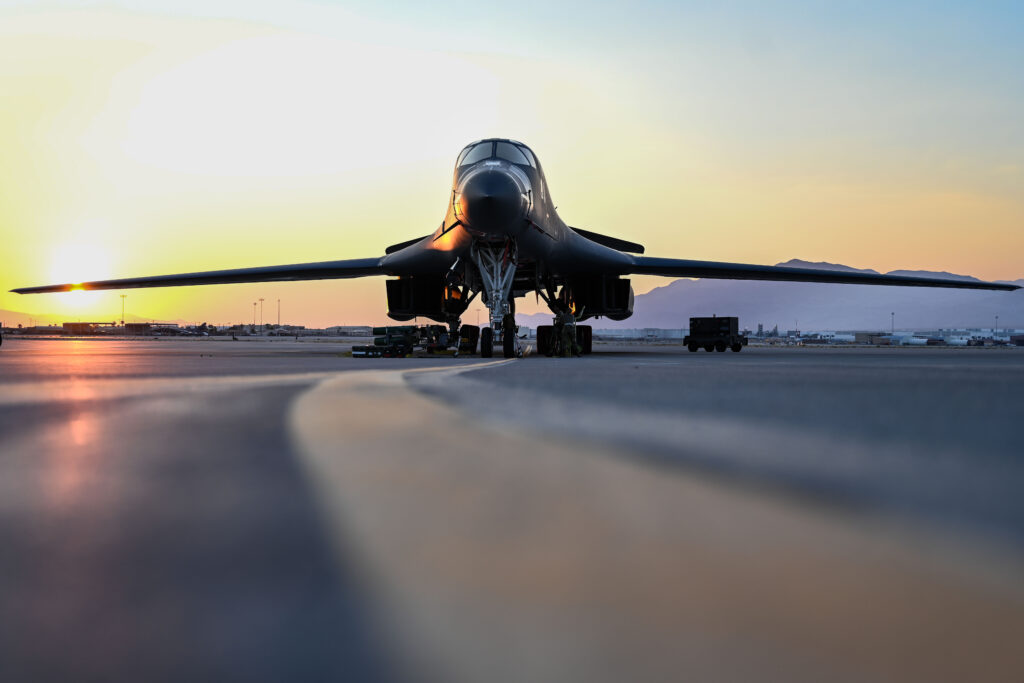


The B-1A was developed in the 1970s as a Mach 2.2 replacement for the B-52. Four prototypes were built and flight-tested in the mid-1970s before the program was canceled in 1977. The Reagan administration revived it in 1981 as the B-1B. Structural changes increased payload by 74,000 pounds and reduced radar cross-section by an order of magnitude. Inlet modifications for the lower radar signature dropped maximum speed to Mach 1.2. The first production aircraft flew in October 1984. The first B-1B was delivered to Dyess AFB in June 1985, and the Air Force declared initial operational capability on 1 October 1986.
The Lancer’s blended wing-body, variable-geometry wings, and afterburning turbofans give it long range, high speed, and strong maneuverability at both low and high altitude. Its synthetic aperture radar supports terrain-following flight and tracking of moving targets. The United States removed the nuclear mission in 1994. Full conversion to a conventional-only role was completed in March 2011 under the New START treaty.
The B-1B first saw combat over Iraq in Operation Desert Fox in December 1998. In Operation Allied Force the following year it delivered more than 20 percent of the total ordnance while flying less than 2 percent of the sorties. In the first six months of Operation Enduring Freedom, eight B-1s dropped nearly 40 percent of coalition tonnage, including 67 percent of the JDAMs used. In Operation Iraqi Freedom it flew less than 1 percent of combat missions yet delivered 43 percent of the JDAMs. The airframe holds nearly 50 world records for speed, payload, range, and time to climb in its class.
Aircraft: Rockwell B-1B Lancer
- Length: 146 ft (44.5 m)
- Wingspan: 137 ft (41.8 m) extended, 79 ft (24.1 m) swept
- Height: 34 ft (10.4 m)
- Empty weight: approximately 190,000 lb (86,183 kg)
- Max takeoff weight: 477,000 lb (216,634 kg)
- Fuel capacity: 265,274 lb (120,326 kg)
- Engines: four General Electric F101-GE-102 afterburning turbofans, 30,000+ lb thrust each
- Top speed: 900+ mph (Mach 1.2 at sea level)
- Range: intercontinental
- Ceiling: more than 30,000 ft (9,144 m)
- Payload: 75,000 lb (34,019 kg) in three internal bays
- Crew: 4 (aircraft commander, copilot, two combat systems officers)