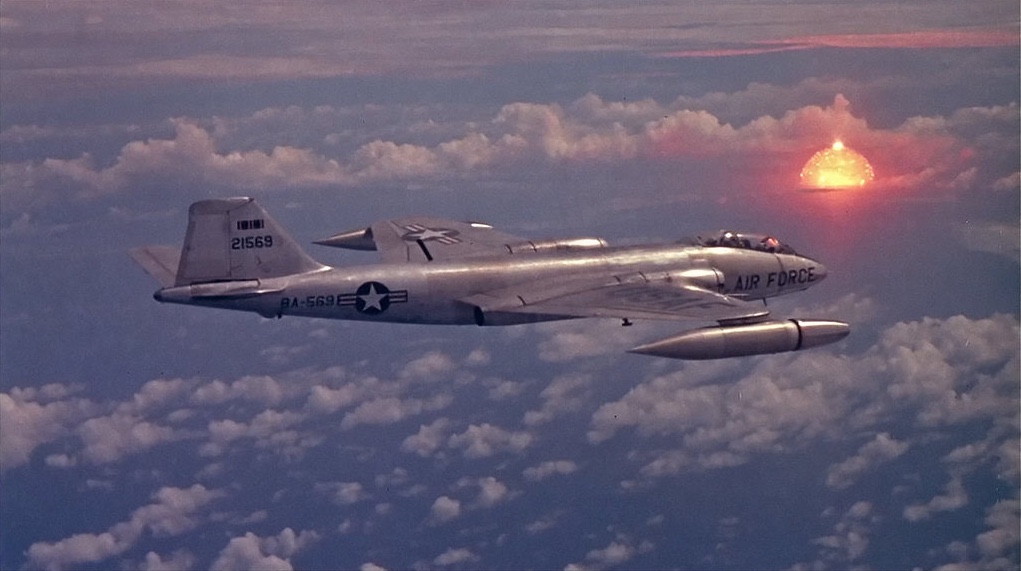


In 1951, facing an urgent need for a modern tactical bomber during the Korean War, the U.S. Air Force made an unusual decision: rather than develop a new design from scratch, it licensed the British English Electric Canberra and had Martin build it in the United States. It remains the only foreign-designed aircraft ever adopted as a standard U.S. bomber in the jet age. The first American-built B-57A flew in July 1953, fitted with a tandem cockpit and license-built Wright J65 engines, a version of the British Armstrong Siddeley Sapphire.
The B-57 went on to serve for decades in a remarkable range of roles beyond level bombing, including high-altitude reconnaissance, electronic warfare, and night intruder missions over the Ho Chi Minh Trail. It was the first American bomber to drop bombs on Viet Cong forces, on February 19, 1965, and continued flying combat missions in Vietnam until 1972. Specialized reconnaissance variants pushed the airframe far beyond its original design, with the RB-57D and RB-57F stretching the wingspan out to over 100 feet for flights above 60,000 feet, missions that put it in the same rarefied territory as the U-2.
Aircraft: Martin B-57B Canberra
- Length: 65 ft 6 in (20.0 m)
- Wingspan: 64 ft (19.5 m)
- Height: 15 ft 6 in (4.7 m)
- Empty weight: 26,000 lb (11,793 kg)
- Max weight: 55,000 to 58,800 lb (24,948 to 26,672 kg)
- Engines: two Wright J65-W-5 turbojets, 7,200 lb thrust each
- Top speed: 570 mph (917 km/h)
- Cruising speed: 450 mph (724 km/h)
- Range: approximately 2,000 mi (3,220 km)
- Service ceiling: 49,000 ft (14,935 m)
- Armament: eight .50 caliber M3 machine guns or four 20mm M39 cannons, plus up to 7,500 lb (3,402 kg) of stores
- Crew: 2