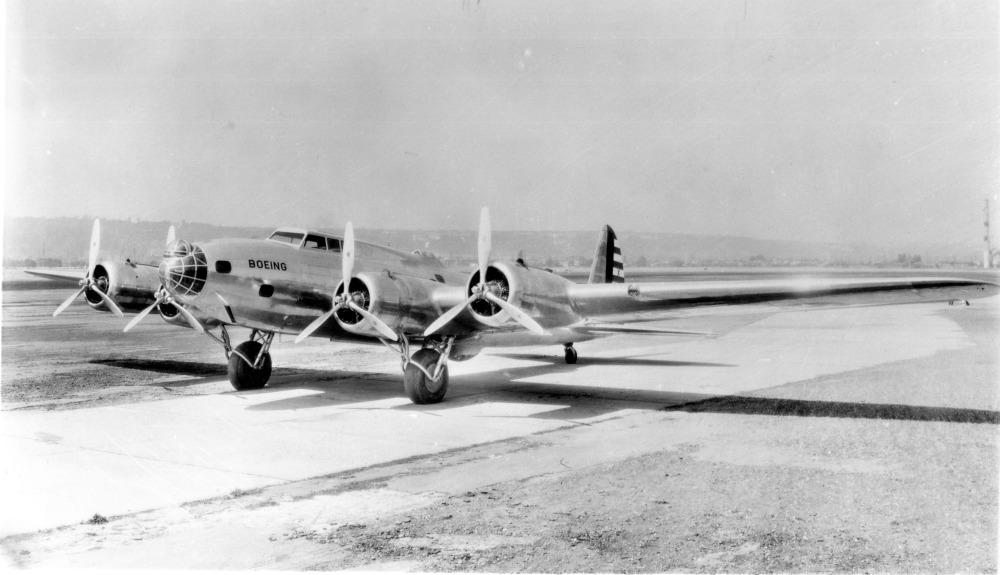


In July 1935, Boeing rolled out the Model 299, a four-engine long-range bomber prototype built at company expense to meet a U.S. Army Air Corps requirement for a bomber that could carry 2,000 pounds of bombs over 2,000 miles at more than 200 mph. It first flew on July 28, 1935, at Boeing Field in Seattle, with chief test pilot Leslie Tower at the controls, in a flight that lasted about 90 minutes.
The day before that flight, a Seattle Times reporter saw the aircraft bristling with machine gun positions and called it a “15-ton flying fortress.” The name stuck, and Boeing later trademarked it for the production bomber that followed, the B-17.
The Model 299 went on to set a distance and speed record, flying nonstop from Seattle to Wright Field in Dayton, Ohio, a distance of 2,100 miles, in just over nine hours at an average speed of 232 mph. Its performance beat out competing twin-engine designs from Douglas and Martin, convincing Army leadership that four-engine bombers were the future.
The prototype’s story ended in tragedy. On October 30, 1935, it crashed on takeoff at Wright Field after the crew forgot to release the control locks, killing both pilots aboard. The accident led directly to the creation of the pilot’s pre-flight checklist, still standard practice today.
Aircraft: Boeing Model 299 (XB-17 prototype)
- Length: 68 ft 9 in (21.0 m)
- Wingspan: 103 ft (31.4 m)
- Empty weight: 21,657 lb (9,824 kg)
- Max gross weight: 38,053 lb (17,262 kg)
- Engines: four Pratt & Whitney R-1690 Hornet radials, 750 hp each
- Cruise speed: 204 mph (328 km/h)
- Top speed: 236 mph (380 km/h)
- Defensive armament: five machine guns
- Bomb load: up to 4,800 lb (2,177 kg)