

Approach Parameters
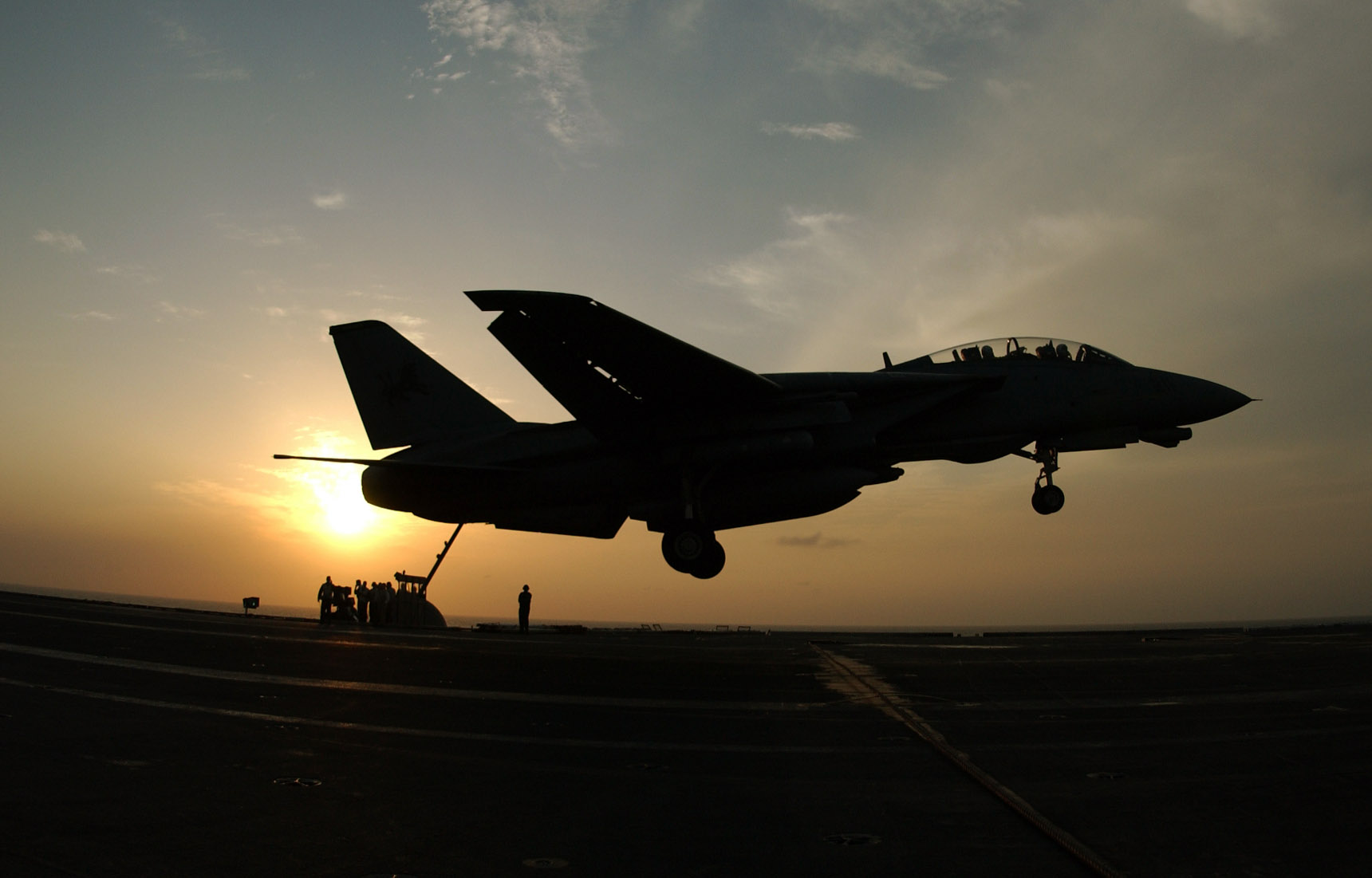
- Approach speed: ~130-145 knots, varying with landing weight (a “heavy” F-14 could approach in the 140s, lighter configurations closer to 125-130 knots)
- Angle of Attack (AoA): Flown “on speed” at approximately 8.1 units AoA on the AoA indexer — the F-14 had a distinctive AoA indexer system with the classic “meatball” donut/chevron display pilots watched
- Approach glideslope: 3.5 degrees, guided by the Fresnel Lens Optical Landing System (“the ball”)
- Sink rate at touchdown: Roughly 600-700 feet per minute (much steeper than a runway landing)
- Wings: Swept fully forward (20°) for landing, flaps and slats deployed, since the variable-sweep wing gave excellent low-speed handling qualities compared to fixed-wing fighters like the F-4
Arresting Gear
- Tailhook engagement: Targeting the 3-wire (of 4 wires, numbered 1-4 from the ramp), considered the “money wire” for an ideal pass
- Arresting cable: Mk 7 arresting gear, bringing the ~54,000-74,000 lb aircraft (depending on fuel/ordnance) from ~140 knots to a stop in about 2 seconds and roughly 320 feet
- Hook-to-ramp clearance: A critical margin naval aviators trained obsessively on — too low risked a ramp strike, too high risked an in-flight engagement or bolter
Landing Signal Officer (LSO) Grading
Every pass was graded on a scale: _OK, OK, (OK), Fair, No Grade, Cut — with wire number and any deviations noted, feeding into a pilot’s cumulative landing grade average that carrier air wings tracked closely.
Bolter Rate
Bolters (missing all four wires, requiring immediate full-power go-around) were common and expected, not considered failures unless frequent — the F-14’s approach characteristics made bolters somewhat more likely than in later jets like the F/A-18.